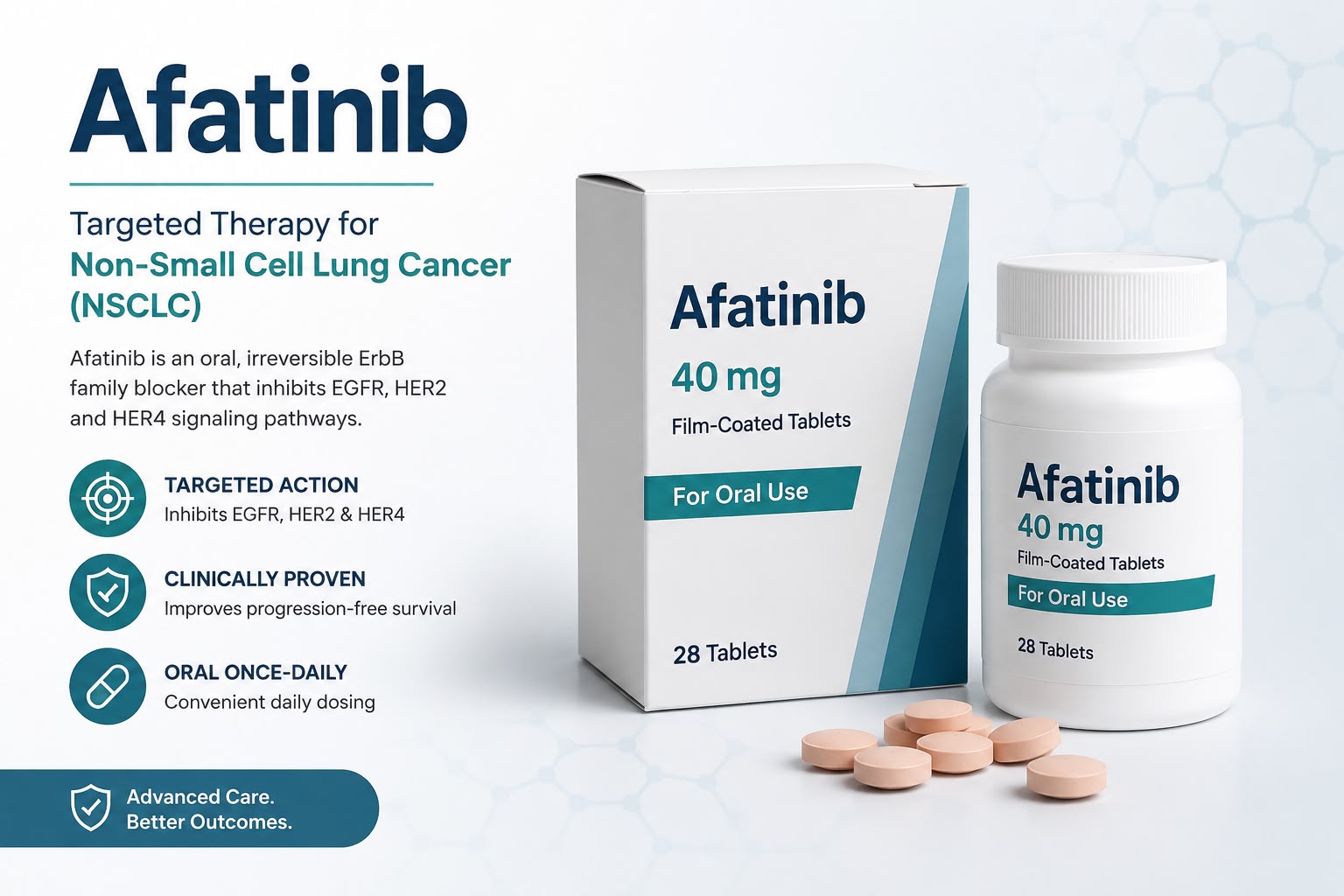


Afatinib is a targeted cancer therapy categorized as an irreversible tyrosine kinase inhibitor (TKI). It belongs to a modern class of precision medicines used primarily in the management of specific types of non-small cell lung cancer (NSCLC). Unlike traditional treatments, Afatinib works at the molecular level to block specific signals that allow cancer cells to grow, survive, and divide.
What is Afatinib Used For?
Afatinib is prescribed for adult patients diagnosed with specific genetic subtypes of advanced or metastatic lung cancer. Its primary clinical indications include:
• EGFR Mutation-Positive Non-Small Cell Lung Cancer (NSCLC): Approved as a first-line treatment for patients whose tumors test positive for non-resistant epidermal growth factor receptor (EGFR) mutations (such as exon 19 deletions or exon 21 L858R substitution).
• Metastatic Squamous NSCLC: Used as a second-line targeted treatment option for patients with advanced squamous non-small cell lung cancer that has progressed following platinum-based chemotherapy.
How Does Afatinib Work?
In EGFR-mutated cancers, abnormal receptor proteins stay permanently active, sending relentless "growth and survival" signals inside cancer cells.
Afatinib works through a distinct molecular mechanism:
• Irreversible Binding: Unlike first-generation TKIs that temporarily attach to receptors, Afatinib covalently and irreversibly binds to the ErbB receptor family—including EGFR (ErbB1), HER2 (ErbB2), and HER4 (ErbB4).
• Blocks Growth Signals: By permanently locking onto these receptors, it halts downstream chemical pathways needed for tumor proliferation.
• Precision Action: It focuses specifically on mutated kinase pathways, minimizing damage to surrounding non-cancerous tissues compared to traditional chemotherapy.
Benefits of Afatinib
• Proven Efficacy: Extends progression-free survival (PFS) in EGFR-positive NSCLC patients compared to conventional platinum-based chemotherapy regimens.
• Convenient Oral Administration: Administered as a once-daily tablet, enabling patients to manage their targeted oncology treatment easily at home.
• Broad ErbB Family Blockade: Its irreversible action against multiple ErbB family members helps suppress complex signaling networks driving tumor progression.
Available Strengths
Afatinib is available in standard oral film-coated tablet strengths to accommodate clinical requirements, dosage adjustments, and patient tolerance:
• 20 mg tablets
• 30 mg tablets
• 40 mg tablets
Recommended Dosage & Administration
Afatinib is taken continuously once daily without scheduled "off-treatment" weeks, until disease progression or unacceptable toxicity occurs.
• Standard Starting Adult Dosage: 40 mg taken orally once daily.
• Administration Rules:
o Take Afatinib on an empty stomach: at least 1 hour before a meal or 2 hours after eating, as food (especially high-fat meals) significantly reduces drug absorption.
o Swallow tablets whole with water. Do not crush, break, or chew them.
o Take the tablet around the same time every day to maintain consistent blood levels.
Missed Dose
• If a dose is missed, take it as soon as remembered—provided the next scheduled dose is 12 hours or more away.
• If the next dose is due within 12 hours, skip the missed dose and resume your regular daily schedule. Do not take a double dose to make up for a missed one.
Common & Serious Side Effects
While Afatinib offers precision targeting, patients must be monitored for side effects characteristic of EGFR inhibition:
• Gastrointestinal Issues (Very Common): Diarrhea is the most frequent side effect (often severe if unmanaged). Nausea, vomiting, stomatitis (mouth sores), and loss of appetite are also common.
• Dermatologic Effects: Acne-like skin rash, dry skin, itching, and paronychia (redness/infection around nails).
• Pneumonitis / Interstitial Lung Disease (ILD): Rare but severe, life-threatening inflammation of the lungs requiring immediate medical evaluation if new/worsening shortness of breath, cough, or fever develops.
• Hepatotoxicity: Elevated liver enzymes requiring routine monitoring of liver function.
• Ocular Toxicity: Keratitis (corneal inflammation) or severe eye pain/dryness/redness.
• Gastrointestinal Perforation: Rare cases of stomach or intestinal tears, particularly in patients with a history of ulcers or taking corticosteroids/NSAIDs.
Drug Interactions
Afatinib is a substrate of the P-glycoprotein (P-gp) transport system. Certain drugs can modify its concentration in the body:
• P-gp Inhibitors: (e.g., ritonavir, ketoconazole, verapamil, amiodarone) can increase Afatinib exposure, raising the risk of adverse reactions.
• P-gp Inducers: (e.g., rifampin, carbamazepine, St. John’s Wort) can lower Afatinib exposure, potentially decreasing its clinical efficacy.
• Concomitant Medications: Caution is advised when taking NSAIDs or corticosteroids alongside Afatinib due to an increased risk of gastrointestinal complications.
Pregnancy and Breastfeeding
• Embryo-Fetal Toxicity: Afatinib can cause severe harm to an unborn baby. Females of reproductive potential must use highly effective contraception during treatment and for at least 2 weeks after the final dose.
• Breastfeeding: Breastfeeding is not recommended during therapy and for at least 2 weeks following the last dose due to potential risks to nursing infants.
Monitoring During Treatment
To ensure patient safety throughout treatment, healthcare providers usually require:
• Diarrhea Management: Proactive monitoring and early use of anti-diarrheal medications (e.g., loperamide) at the first sign of loose stools.
• Liver & Renal Function Tests: Periodic blood tests to track liver enzyme levels and kidney parameters.
• Dermatologic Evaluation: Prompt assessment of severe rashes or nail infections.
• Pulmonary & Ophthalmic Checks: Immediate investigation if respiratory symptoms or visual alterations occur.
Generic Afatinib
Generic versions of Afatinib (Afatinib Dimaleate) are produced globally under stringent international quality standards:
• Cost-Effectiveness: Provides a substantially more affordable, budget-friendly alternative compared to brand-name preparations (such as Gilotrif / Giotrif).
• Therapeutic Equivalence: Contains the identical active pharmaceutical ingredient (API), delivering equivalent clinical safety profiles, binding mechanisms, and therapeutic outcomes.
• Global Access: Improves worldwide availability for patients needing long-term targeted EGFR precision oncology options.
Frequently Asked Questions (FAQs)
Is Afatinib considered traditional chemotherapy?
No. Afatinib is an oral targeted tyrosine kinase inhibitor (TKI). It targets and inhibits specific proteins (EGFR/ErbB) driving the tumor cells, making its mechanism and side-effect profile distinct from broad cytotoxic chemotherapy.
Should I take Afatinib with food?
No. Food—especially meals containing fat—can significantly decrease how much Afatinib your body absorbs. Take it at least 1 hour before a meal or 2 hours after a meal.
What should I do if I get diarrhea while taking Afatinib?
Diarrhea is very common with Afatinib. You should consult your doctor beforehand so they can prescribe an anti-diarrheal medication (like loperamide). Start taking anti-diarrheal treatment and increase fluid intake at the very first sign of loose stools, and notify your oncology team if it persists.
Important Safety Information
This article is intended for educational purposes only and does not substitute for expert medical advice. Always consult a qualified oncologist or healthcare professional before initiating, adjusting, or stopping Afatinib therapy.
References
• U.S. Food and Drug Administration (FDA) Prescribing Information
• National Comprehensive Cancer Network (NCCN) Clinical Practice Guidelines in Oncology
• European Medicines Agency (EMA) Drug Information Portal
• American Society of Clinical Oncology (ASCO)
Contact Us
Are you searching for Generic Afatinib, wholesale pricing structures, global availability, or export documentation?
Our expert team is fully equipped to guide you through trusted manufacturer selections, product availability, international licensing, and country-specific import regulations. Contact us today to learn more.
What is Afatinib?
Afatinib is a targeted cancer therapy categorized as an irreversible tyrosine kinase inhibitor (TKI). It belongs to a modern class of precision medicines used primarily i…