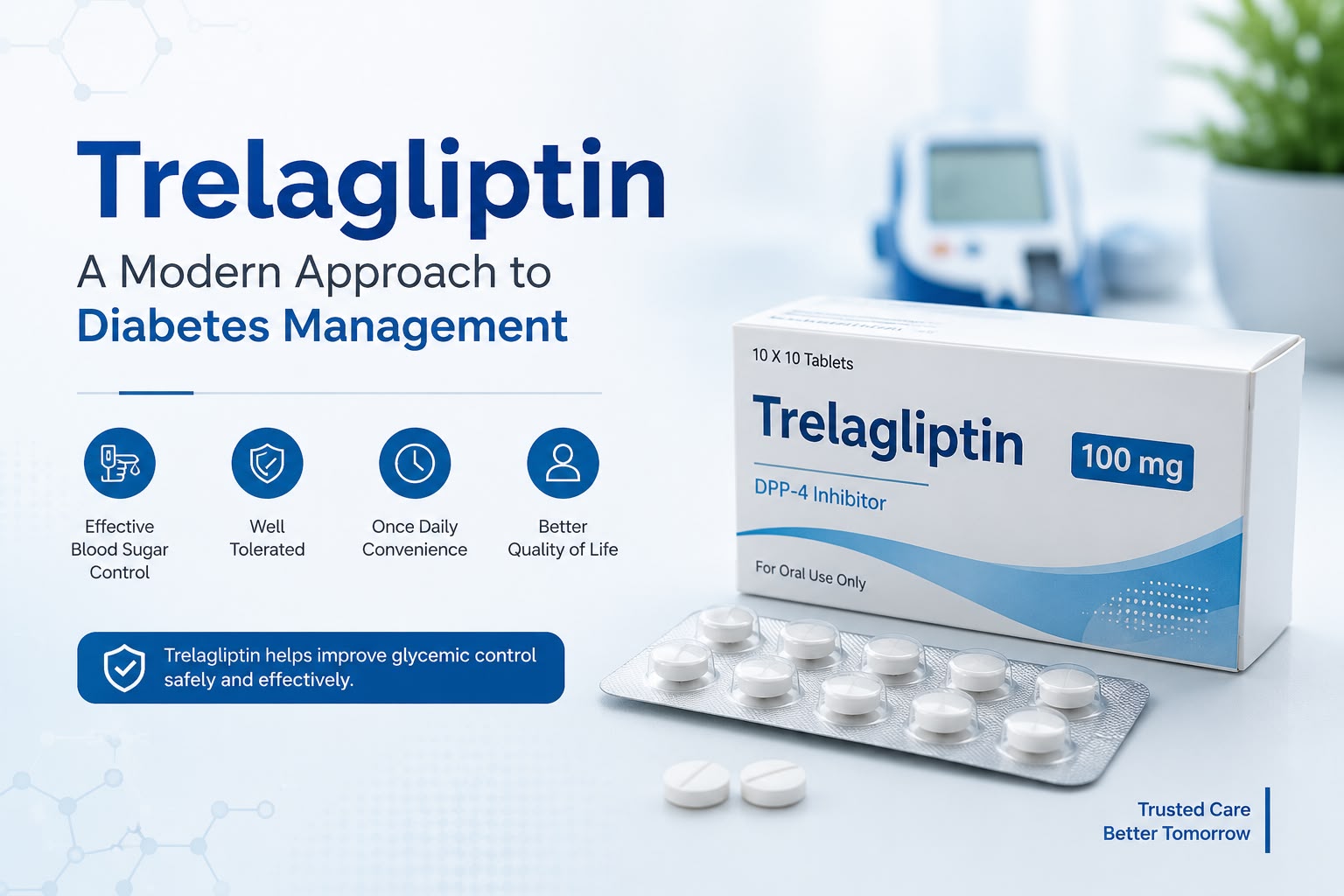


Trelagliptin (commonly formulated as Trelagliptin Succinate) is an orally active, highly selective dipeptidyl peptidase-4 (DPP-4) inhibitor used to improve blood sugar (glucose) control in adult patients with Type 2 Diabetes Mellitus (T2DM). It is a targeted antidiabetic medication designed to enhance the body's natural incretin system, helping lower blood glucose levels with a significantly reduced risk of hypoglycemia compared to traditional therapies.
Unlike standard daily DPP-4 inhibitors (such as sitagliptin or vildagliptin), Trelagliptin features a long-acting molecular structure that enables once-weekly oral administration. It is prescribed following clinical and laboratory evaluation when diet, exercise, or first-line antidiabetic therapies require additional support.
What is Trelagliptin Used For?
Trelagliptin is indicated for adult patients with Type 2 Diabetes Mellitus in several specific clinical scenarios:
• Type 2 Diabetes Monotherapy: Used as a primary oral treatment in patients who cannot achieve adequate glycemic control through diet and physical exercise alone.
• Combination Therapy: Prescribed alongside other antidiabetic agents (such as Metformin, Sulfonylureas, or Insulin) when first-line therapies do not sufficiently lower HbA1c levels.
• Simplified Weekly Regimens: Ideal for patients who struggle with medication adherence under daily dosing schedules.
• Renal-Dose Adjusted Management: Can be administered with appropriate dose adjustments (e.g., 50 mg weekly) in patients with moderate renal impairment.
Note: Trelagliptin is not indicated for patients with Type 1 Diabetes Mellitus or for the treatment of Diabetic Ketoacidosis (DKA).
How Does Trelagliptin Work?
When food is ingested, the intestines naturally release incretin hormones—specifically GLP-1 (glucagon-like peptide-1) and GIP (glucose-dependent insulinotropic polypeptide). These hormones signal the pancreas to release insulin and suppress excess glucagon. Normally, the enzyme DPP-4 rapidly degrades these incretins within minutes.
Trelagliptin selectively binds to and inhibits the DPP-4 enzyme, blocking this degradation. This targeted mechanism helps:
• Extend Incretin Activity: Maintains elevated levels of circulating active GLP-1 and GIP throughout the entire week.
• Glucose-Dependent Insulin Secretion: Triggers pancreatic beta-cells to release insulin primarily when blood glucose levels are elevated (after meals), minimizing the risk of dangerously low blood sugar.
• Suppress Excess Glucagon: Reduces inappropriate liver glucose production after meals.
• Sustain 7-Day Control: Provides stable plasma concentrations with an elimination half-life ranging from 65 to 95 hours.
Benefits of Trelagliptin
Clinical evaluations show several key therapeutic benefits for appropriate candidates:
• Convenient Once-Weekly Dosing: Replaces daily tablet administration with a single weekly dose, greatly improving compliance.
• Low Risk of Hypoglycemia: Works in a glucose-dependent manner, stimulating insulin release only when blood sugar is high.
• Weight-Neutral Profile: Unlike some antidiabetic medications, Trelagliptin does not cause weight gain.
• Stable Glycemic Control: Smooths out daily blood sugar fluctuations and lowers overall HbA1c levels.
• Flexible Administration: Can be taken with or without food at any time of day.
• Enhances Quality of Life: Reduces pill burden and daily treatment anxiety for chronic diabetes management.
Who Should Receive Trelagliptin?
Trelagliptin may be appropriate for patients who:
• Have a confirmed diagnosis of Type 2 Diabetes Mellitus.
• Experience difficulty maintaining regular daily dosing regimens for chronic conditions.
• Have sub-optimal blood sugar control on Metformin or lifestyle modifications.
• Are evaluated and deemed suitable candidates by an endocrinologist or primary care physician.
Available Strengths
Trelagliptin tablets (typically as Trelagliptin Succinate) are available in:
• 50 mg tablets (recommended for patients with moderate renal impairment)
• 100 mg tablets (standard adult dose for normal to mild renal function)
Recommended Dosage
The standard adult dosage of Trelagliptin is 100 mg taken orally once weekly.
• Moderate Renal Impairment: The dosage is typically reduced to 50 mg once weekly due to delayed drug clearance.
• Severe Renal Impairment / End-Stage Renal Failure: Requires careful specialist evaluation; dosage adjustments (such as 25 mg weekly) may apply depending on local prescribing guidelines.
General Administration Instructions
• Weekly Schedule: Choose a specific day of the week (e.g., every Sunday) and take the dose on that same day each week.
• Swallow Whole: Take the tablet whole with a glass of water; do not crush, chew, or split.
• Food Flexibility: May be taken with or without food.
• Consistency: Take around the same time of day on your designated dosing day.
Missed Dose
If you forget to take your weekly dose:
• Take as soon as remembered on the same week if it is several days before your next scheduled dose.
• If it is nearly time for your next scheduled dose, skip the missed dose and resume your normal weekly schedule.
• Never take two tablets at once or double up to make up for a missed dose.
• Consult your physician or pharmacist if you are unsure how to adjust your schedule.
Common Side Effects
Trelagliptin is generally well tolerated, but some patients may experience mild to moderate side effects:
• Nasopharyngitis (common cold symptoms, runny nose, sore throat)
• Mild headache or fatigue
• Gastrointestinal discomfort (nausea, mild diarrhea, abdominal bloating)
• Elevated liver or pancreatic enzyme levels (ALT, AST, amylase, lipase)
• Mild skin rash or itching (pruritus)
Contact your healthcare provider immediately if you experience persistent severe abdominal pain radiating to your back (a potential sign of acute pancreatitis) or signs of severe allergic reaction.
Drug Interactions
Inform your physician about all medications and supplements you take before starting Trelagliptin:
• Sulfonylureas & Insulin: Combining Trelagliptin with insulin secretagogues or insulin increases the risk of hypoglycemia. A dose reduction in the sulfonylurea or insulin may be required.
• Renally Excreted Drugs: Since Trelagliptin is primarily eliminated by the kidneys, co-administration with other renal-cleared medications requires monitoring.
• Hepatotoxic Medications: Drugs that significantly alter liver enzyme clearance should be evaluated.
Pregnancy and Breastfeeding
• Pregnancy: Data regarding Trelagliptin use in pregnant women is limited. It should be avoided during pregnancy unless explicitly deemed necessary by a physician.
• Breastfeeding: Studies indicate Trelagliptin or its metabolites may pass into breast milk. Nursing should generally be avoided during treatment.
Monitoring During Treatment
To ensure safe and effective therapy, healthcare providers routinely monitor:
• HbA1c & Blood Glucose: Fasting and postprandial blood sugar tests to assess glycemic response.
• Renal Function Tests (eGFR / Serum Creatinine): Baseline and periodic checks to confirm appropriate weekly dosing.
• Liver Function Tests (ALT, AST, Bilirubin): Periodic laboratory checks.
• Pancreatic Enzymes: Assessed if symptoms of pancreatitis occur.
Storage Instructions
• Store below 30°C (86°F).
• Protect from direct sunlight, excess heat, and moisture.
• Keep tablets in their original packaging until administration.
• Store safely out of reach of children and pets.
Generic Trelagliptin
Generic Trelagliptin contains the exact active pharmaceutical ingredient (Trelagliptin Succinate) as brand-name formulations (such as Zafatek).
Key Advantages:
• Cost Reduction: Dramatically lowers the overall expense of long-term diabetes management.
• Identical Bioequivalence: Offers equivalent therapeutic efficacy, safety, and pharmacokinetic performance.
• Global Access: Available under various generic brand names across international markets (e.g., Wedica, Trelaget, Trelaglip).
Who Should Not Take Trelagliptin?
Trelagliptin is contraindicated or not recommended for:
• Patients with known severe hypersensitivity to Trelagliptin or any tablet excipient.
• Individuals with Type 1 Diabetes Mellitus or Diabetic Ketoacidosis (DKA).
• Patients with severe end-stage renal failure on dialysis without proper medical supervision and dose adaptation.
• Patients with a history of severe hypersensitivity or acute pancreatitis linked to DPP-4 inhibitors.
Foods and Lifestyle Tips During Treatment
• Dietary Schedule: Trelagliptin can be taken with or without food. Maintain a balanced diabetic diet rich in fiber and controlled in refined carbohydrates.
• Hydration: Drink adequate fluids daily.
• Routine Exercise: Complement weekly medication with regular physical activity to optimize insulin sensitivity.
• Blood Sugar Tracking: Maintain a weekly blood glucose log, especially on the day before and day after taking your tablet.
How Long Does Trelagliptin Take to Work?
• Initial Action: Trelagliptin begins inhibiting the DPP-4 enzyme within hours, reaching peak blood concentration within 4 to 6 hours.
• Sustained Control: Maintains over 70-80% DPP-4 enzyme inhibition throughout the entire 7-day period.
• HbA1c Reduction: Measurable improvements in average blood glucose and HbA1c are typically observed within 2 to 4 weeks of consistent weekly treatment.
Clinical Advantages
• Once-a-Week Convenience: Replaces 7 daily pills with 1 weekly tablet, solving adherence issues.
• Glucose-Dependent Safety: Reduces blood sugar only when needed, minimizing hypoglycemic events.
• Targeted Incretin Enhancement: Preserves endogenous GLP-1/GIP without broad metabolic disturbance.
• Flexible Dosing: Available in 100 mg and 50 mg strengths for tailored renal dosing.
Frequently Asked Questions (FAQs)
Is Trelagliptin an insulin or a steroid?
No. Trelagliptin is an oral dipeptidyl peptidase-4 (DPP-4) inhibitor that helps your body produce its own insulin naturally in response to meals.
Can Trelagliptin cure Type 2 Diabetes?
No. Trelagliptin effectively manages and lowers elevated blood sugar levels, but it does not cure diabetes. Continuous lifestyle modifications and adherence to treatment are required.
Do I need to take Trelagliptin every day?
No. Unlike most oral diabetes medications, Trelagliptin is taken strictly once per week.
Is a prescription required?
Yes. Trelagliptin is a prescription-only antidiabetic medication.
Important Safety Information
This educational article is intended solely for informational purposes and should not replace professional medical advice, diagnosis, or treatment. Always consult a qualified physician or endocrinologist before starting, modifying, or discontinuing any antidiabetic therapy.
References
1. Japanese Pharmaceuticals and Medical Devices Agency (PMDA) Prescribing Information for Trelagliptin Succinate (Zafatek).
2. Clinical Efficacy and Safety Profile of Once-Weekly Trelagliptin in Type 2 Diabetes Mellitus.
3. American Diabetes Association (ADA) Standards of Medical Care in Diabetes.
4. Peer-reviewed endocrinology and diabetes management journals.
Contact Us
Looking for Generic Trelagliptin, wholesale pricing, international distribution, or export details?
Our team provides comprehensive information on global product availability, generic manufacturer options, regulatory documentation, and country-specific pharmaceutical supply solutions. Availability is subject to local regulatory approvals and import policies.
What is Trelagliptin?
Trelagliptin (commonly formulated as Trelagliptin Succinate) is an orally active, highly selective dipeptidyl peptidase-4 (DPP-4) inhibitor used to improve blood sugar (g…