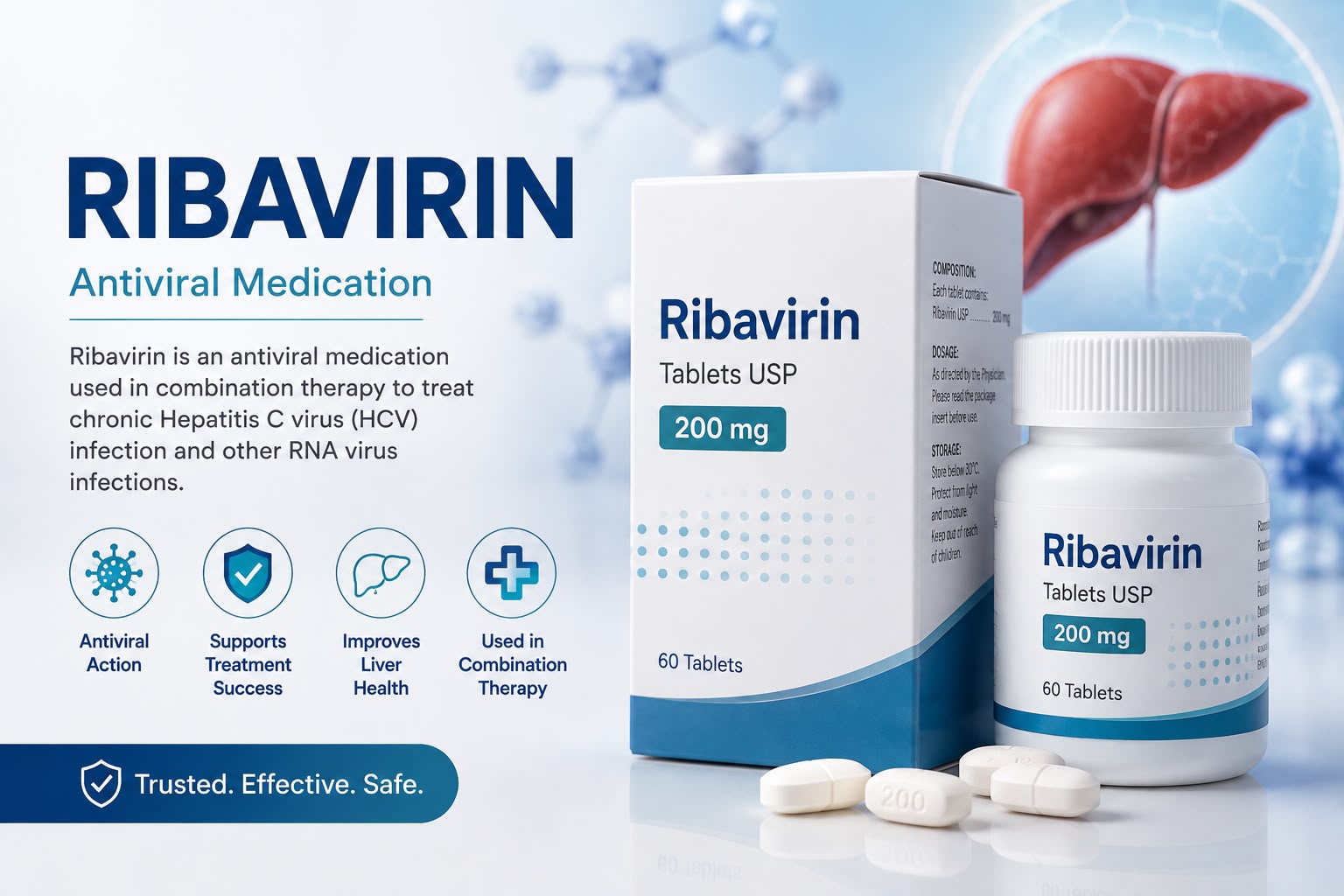


Ribavirin is a broad-spectrum synthetic nucleoside analog antiviral medication. It belongs to a modern class of antiviral agents designed to interfere with viral RNA synthesis and replication.
Unlike targeted direct-acting antivirals (DAAs), Ribavirin acts as a systemic antiviral co-agent. It is rarely used as a monotherapy for chronic infections; instead, it is prescribed in combination with other potent antiviral medications—such as direct-acting antivirals or interferons—to enhance viral clearance and prevent treatment relapse.
What is Ribavirin Used For?
Ribavirin is prescribed for adult and pediatric patients (meeting specific age and weight criteria) for the treatment of severe or complex viral infections. Its primary clinical indications include:
• Chronic Hepatitis C Virus (HCV) Infection: Used as a combination agent alongside Direct-Acting Antivirals (e.g., Sofosbuvir-based regimens) or Pegylated Interferon for patients with specific HCV genotypes, decompensated cirrhosis, or prior treatment failures.
• Severe Respiratory Syncytial Virus (RSV): Administered via oral or aerosolized routes in select pediatric or immunocompromised patients with severe lower respiratory tract infections.
• Viral Hemorrhagic Fevers (Off-label / Specialty Use): Utilized under specialist supervision for specific severe viral hemorrhagic fevers, such as Lassa fever or Crimean-Congo hemorrhagic fever.
How Does Ribavirin Work?
Ribavirin operates through multiple cellular and molecular mechanisms to suppress viral replication:
• Intracellular Phosphorylation: Once ingested, Ribavirin is converted by cellular enzymes into its active mono-, di-, and triphosphate metabolites.
• Inhibition of IMP Dehydrogenase: Ribavirin monophosphate inhibits cellular inosine monophosphate (IMP) dehydrogenase, causing a severe depletion of intracellular guanosine triphosphate (GTP) pools needed for viral RNA synthesis.
• Inhibition of Viral Polymerase & Mutagenesis: Ribavirin triphosphate directly inhibits viral RNA-dependent RNA polymerase and incorporates into viral RNA, causing lethal mutagenesis (catastrophic mutation accumulation) that prevents the virus from replicating effectively.
Benefits of Ribavirin
• Synergistic Antiviral Potency: When combined with direct-acting antivirals or interferons, Ribavirin significantly reduces relapse rates in hard-to-treat Hepatitis C patient populations (e.g., decompensated cirrhosis or Genotype 3).
• Broad-Spectrum Mechanism: Targets basic nucleoside synthesis and viral replication processes, making viral resistance less likely to develop against it compared to single-target agents.
• Versatile Oral Formulations: Available in capsules, tablets, and oral solutions to suit diverse adult and pediatric dosing schedules.
Available Strengths
Ribavirin is manufactured in precise oral and inhalation formulations depending on the therapeutic indication:
• 200 mg film-coated tablets
• 200 mg hard oral capsules
• 40 mg/mL oral solution (for pediatric administration)
Recommended Dosage & Administration
Ribavirin dosing is highly personalized and typically calculated based on patient body weight, renal function, and the primary viral indication.
Standard Dosage Guidelines for Chronic Hepatitis C
• Weight-Based Dosing (in combination with DAAs or Interferon):
o Body Weight < 75 kg: 1,000 mg daily (given as two 200 mg tablets in the morning and three 200 mg tablets in the evening).
o Body Weight $\ge$ 75 kg: 1,200 mg daily (given as three 200 mg tablets in the morning and three 200 mg tablets in the evening).
Administration Rules
• Take with Food: Always take Ribavirin tablets/capsules with food (preferably a meal or snack) to maximize bio-absorption and reduce stomach upset.
• Swallow Whole: Swallow tablets or capsules whole with water. Do not crush, split, or chew the medication.
• Consistency is Key: Divide the total daily dose into two doses (morning and evening) taken approximately 12 hours apart.
Missed Dose
• If a dose is missed, take it with food as soon as remembered on that day. If it is nearly time for your next dose, skip the missed dose and stay on your regular schedule. Do not double the dose to make up for a missed one.
Common & Serious Side Effects
Ribavirin is associated with significant hematologic and systemic toxicities that require strict medical oversight:
• Hemolytic Anemia (Boxed Warning): Ribavirin causes dose-dependent red blood cell destruction (hemolysis), leading to significant drops in hemoglobin levels (often within the first 1–4 weeks of treatment).
• Embryo-Fetal Toxicity & Birth Defects (Boxed Warning): Highly teratogenic. Causes severe birth defects and fetal death.
• Systemic & Constitutional Effects: Fatigue, weakness, headache, fever, chills, and muscle aches (myalgia).
• Gastrointestinal Symptoms: Nausea, vomiting, loss of appetite, metallic taste, and diarrhea.
• Dermatologic & Psychiatric Reactivity: Pruritus (itching), dry skin, rash, insomnia, anxiety, and mood changes (especially when co-administered with interferon).
Drug Interactions
Ribavirin interacts with several key nucleoside analogs and metabolic agents:
• Didanosine (ddI): Co-administration is contraindicated due to severe, potentially fatal mitochondrial toxicity, hepatic failure, and pancreatitis.
• Zidovudine (AZT): Increases the risk and severity of severe anemia; co-administration should generally be avoided.
• Azathioprine: Ribavirin increases azathioprine metabolites, leading to severe bone marrow suppression and severe pancytopenia.
• Antacids: Antacids containing aluminum, magnesium, or simethicone can reduce Ribavirin absorption; space administration by at least 2 hours.
Pregnancy and Breastfeeding
BLACK BOX WARNING — EMBRYO-FETAL TOXICITY:
Ribavirin causes severe birth defects, structural malformations, and fetal death. Ribavirin therapy is strictly contraindicated in pregnant women and in male partners of pregnant women.
• Pregnancy Rules for Female Patients & Male Partners:
o Female patients must have a negative pregnancy test immediately prior to initiating treatment, monthly during treatment, and monthly for 6 months post-treatment.
o At least two reliable forms of effective contraception must be used simultaneously by sexually active patients (both female patients and male partners of female patients) during treatment and for at least 6 months after stopping Ribavirin.
• Breastfeeding: Breastfeeding is strictly contraindicated during Ribavirin therapy due to potential serious toxicities in nursing infants.
Monitoring During Treatment
Rigorous laboratory monitoring is mandatory throughout Ribavirin therapy:
• Complete Blood Count (CBC) & Hemoglobin: Baseline, week 2, week 4, and periodically thereafter to detect rapid-onset hemolytic anemia.
• Pregnancy Testing: Routine monthly pregnancy tests during treatment and for 6 months post-treatment for females of childbearing potential.
• Uric Acid Levels: Regular monitoring, as Ribavirin-induced hemolysis can elevate serum uric acid levels and trigger gout flares.
• Cardiac Assessments: Monitoring in patients with pre-existing cardiovascular disease, as anemia can exacerbate angina or heart disease.
Generic Ribavirin
Generic formulations of Ribavirin are produced globally in accordance with strict international pharmaceutical standards:
• Cost-Effectiveness: Delivers an affordable, highly accessible treatment alternative compared to original brand formulations (such as Copegus or Rebetol).
• Therapeutic Equivalence: Contains the exact active pharmaceutical ingredient (API), providing bioequivalent antiviral efficacy, safety profiles, and clinical success.
• Global Access: Expands affordable chronic Hepatitis C and complex viral management across global healthcare systems.
Frequently Asked Questions (FAQs)
Why is food required when taking Ribavirin?
Taking Ribavirin with food—especially meals containing healthy fats—significantly increases the amount of medication absorbed into your bloodstream, ensuring therapeutic drug levels are reached.
Why do male patients need to use contraception if their partner is taking Ribavirin?
Ribavirin concentrates in human sperm. If a male patient takes Ribavirin, the drug can be transferred to a female partner during intercourse, posing extreme risks of severe birth defects to an embryo or fetus.
What should I do if I feel unusually tired or short of breath while on Ribavirin?
Contact your healthcare provider immediately. Unexplained fatigue, pale skin, rapid heartbeat, or shortness of breath can be signs of a sudden drop in hemoglobin due to Ribavirin-induced hemolytic anemia, which may require a dose reduction.
Important Safety Information
This article is intended for educational purposes only and does not substitute for expert medical advice. Always consult a qualified physician, hepatologist, or infectious disease specialist before initiating, adjusting, or stopping Ribavirin therapy.
References
• U.S. Food and Drug Administration (FDA) Prescribing Information (Copegus / Rebetol)
• World Health Organization (WHO) Guidelines for the Treatment of Chronic Hepatitis C
• American Association for the Study of Liver Diseases (AASLD) / Infectious Diseases Society of America (IDSA) HCV Guidance
Contact Us
Are you searching for Generic Ribavirin, wholesale pricing structures, global availability, or export documentation?
Our expert team is fully equipped to guide you through trusted manufacturer selections, product availability, international licensing, and country-specific import regulations. Contact us today to learn more.
What is Ribavirin?
Ribavirin is a broad-spectrum synthetic nucleoside analog antiviral medication. It belongs to a modern class of antiviral agents designed to interfere with viral RNA synt…