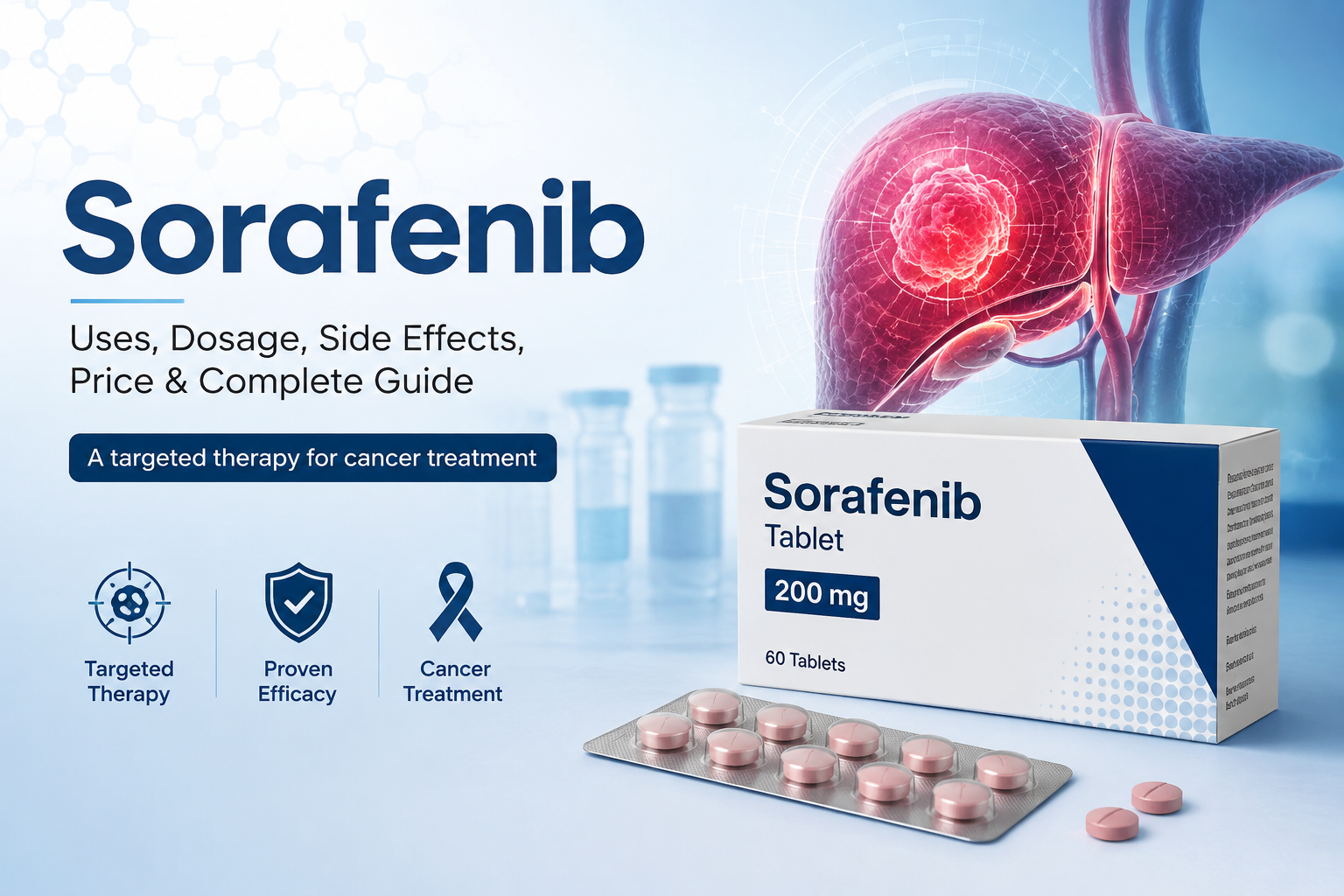


Sorafenib (sold under the brand name Nexavar) is a targeted antineoplastic medication categorized as an oral multikinase inhibitor. It represents a significant milestone in oncology, offering a dual-action targeted mechanism that inhibits both tumor cell proliferation and tumor angiogenesis (the growth of new blood vessels that feed the tumor).
By simultaneously blocking intracellular and cell-surface receptor tyrosine kinases, Sorafenib slows disease progression in advanced solid tumors that often have limited therapeutic options.
What is Sorafenib Used For?
Sorafenib is indicated for adult patients for the treatment and management of specific advanced or metastatic cancers:
• Hepatocellular Carcinoma (HCC): Treatment of advanced or unresectable primary liver cancer.
• Advanced Renal Cell Carcinoma (RCC): Treatment of advanced kidney cancer in patients who have failed or are unsuitable for interferon-alpha or interleukin-2 based therapy.
• Differentiated Thyroid Carcinoma (DTC): Treatment of locally recurrent or metastatic, progressive, radioiodine (RAI)-refractory differentiated thyroid carcinoma.
How Does Sorafenib Work?
Sorafenib is a small molecule multikinase inhibitor that targets multiple intracellular (C-RAF, BRAF, mutant BRAF) and cell-surface receptor tyrosine kinases (KIT, FLT-3, RET, VEGFR-1, VEGFR-2, VEGFR-3, and PDGFR-$\beta$).
It operates through a dual mechanism of action:
• Direct Tumor Cell Growth Inhibition: Blocks the RAF/MEK/ERK signaling pathway (MAP kinase pathway) within tumor cells to inhibit cellular proliferation.
• Anti-Angiogenic Activity: Inhibits VEGFR and PDGFR receptors on tumor blood vessel cells, cutting off the blood and oxygen supply necessary for tumor growth and metastatic spread.
Benefits of Sorafenib
• Dual Target Strategy: Combines direct tumor cell signal blockage with anti-angiogenic activity to restrict tumor expansion.
• Extended Survival: Clinically proven in landmark phase III trials (such as the SHARP trial for HCC) to prolong overall survival and progression-free survival in advanced cancers.
• Oral Outpatient Therapy: Administered as a convenient daily tablet, allowing home management without requiring frequent intravenous chemotherapy infusions.
Available Strengths
Sorafenib is manufactured as single-agent film-coated oral tablets (typically as Sorafenib Tosylate):
• 200 mg film-coated tablets (Standard strength)
Recommended Dosage & Administration
Sorafenib dosage depends on the cancer indication and individual treatment tolerance.
Standard Adult Dosage Guidelines
• Standard Recommended Dose: 400 mg (two 200 mg tablets) orally twice daily (totaling 800 mg daily).
• Treatment Duration: Continued as long as clinical benefit is observed or until unacceptable drug toxicity occurs.
Crucial Administration Rules
• Empty Stomach Requirement: Take Sorafenib without food or with a low-fat or moderate-fat meal. High-fat meals significantly decrease Sorafenib bioavailability; take tablets at least 1 hour before or 2 hours after high-fat meals.
• Swallow Whole: Swallow tablets whole with a glass of water. Do not crush, split, or chew the tablets.
• Consistency: Take doses approximately 12 hours apart at the same time each day to maintain steady blood concentrations.
Missed Dose
• If a dose is missed, skip the missed dose and take the next scheduled dose at the regular time. Do not take two doses at once to compensate for a missed tablet.
Common & Serious Side Effects
Sorafenib exhibits a distinct adverse reaction profile driven by multikinase and anti-angiogenic inhibition:
• Common Side Effects:
o Dermatologic: Hand-Foot Skin Reaction (palmar-plantar erythrodysesthesia)—causing redness, swelling, peeling, or pain on the palms and soles; skin rash, alopecia (hair thinning), and dry skin.
o Gastrointestinal: Diarrhea (very common), nausea, vomiting, loss of appetite, and stomatitis.
o Systemic & Cardiovascular: Hypertension (high blood pressure) and fatigue/weakness.
• Serious Warnings & Precautions:
o Cardiovascular Events: Risk of cardiac ischemia, myocardial infarction, congestive heart failure, and QT prolongation.
o Hemorrhage: Increased risk of severe or fatal bleeding events (e.g., gastrointestinal or respiratory bleeding).
o Gastrointestinal Perforation: Rare instances of stomach or intestinal perforation.
o Severe Hypertension: Blood pressure should be monitored regularly, especially during the first 6 weeks of therapy.
o Severe Skin Reactions: Risk of severe dermatologic toxicity including Stevens-Johnson Syndrome (SJS) and Toxic Epidermal Necrolysis (TEN).
Drug Interactions
Sorafenib is metabolized primarily by the liver enzyme CYP3A4 and undergoes glucuronidation via UGT1A9:
• Strong CYP3A4 Inducers: Medications like rifampin, carbamazepine, phenytoin, dexamethasone, and St. John's Wort decrease Sorafenib blood concentrations, potentially leading to treatment failure.
• Warfarin & Anticoagulants: Concomitant use may increase the risk of bleeding or altered INR; regular prothrombin time/INR monitoring is recommended.
• Neomycin & Systemic Antibiotics: Oral antibiotics may alter intestinal microflora, leading to decreased enterohepatic circulation and lower Sorafenib exposure.
Pregnancy and Breastfeeding
• Pregnancy Hazard: Sorafenib can cause fetal harm or embryo-fetal death when administered during pregnancy due to its mechanism of action. Females of reproductive potential must use effective contraception during treatment and for at least 6 months after the final dose. Male patients with female partners of reproductive potential must also use effective contraception during treatment and for at least 3 months after the final dose.
• Breastfeeding: It is unknown whether Sorafenib passes into human milk. Breastfeeding should be discontinued during treatment and for at least 2 weeks after the last dose.
Monitoring During Treatment
Therapy requires ongoing clinical surveillance by an oncology specialist:
• Blood Pressure Monitoring: Weekly monitoring during the first 6 weeks of therapy, followed by regular checks to manage treatment-emergent hypertension.
• Liver & Kidney Function Tests: Periodic baseline and ongoing monitoring of serum transaminases (ALT, AST), bilirubin, and renal function.
• Cardiac & Electrolyte Surveillance: Periodic ECGs and monitoring of serum electrolytes (potassium, magnesium, calcium), especially in patients at risk for QT prolongation.
• Dermatologic Checks: Routine monitoring for signs of Hand-Foot Skin Reaction or severe skin rash to initiate early intervention or dose modifications.
Generic Sorafenib
Generic formulations of Sorafenib Tosylate (200 mg) are globally available following patent expirations:
• Cost-Effectiveness: Substantially lowers treatment costs for patients and healthcare institutions compared to brand-name Nexavar.
• Therapeutic Equivalence: Manufactured with the identical active pharmaceutical ingredient (API), meeting international standards for bioequivalence, efficacy, and safety.
Frequently Asked Questions (FAQs)
What is Hand-Foot Skin Reaction (HFSR) and how can it be managed?
HFSR causes redness, tenderness, swelling, or calluses on the palms of the hands and soles of the feet. Management includes avoiding friction or heat on the hands and feet, applying moisturizing creams, using cushioned footwear, and using topical treatments prescribed by your doctor. Severe cases may require temporary dose reductions.
Can I take Sorafenib with food?
Sorafenib can be taken with a low-fat or moderate-fat meal. However, avoid taking it with high-fat meals, as high fat content reduces the amount of drug your body absorbs.
How soon should I expect my blood pressure to be checked after starting Sorafenib?
Blood pressure usually increases early in therapy. Your medical team will typically check your blood pressure weekly for the first 6 weeks of treatment and prescribe anti-hypertensive medication if needed.
Important Safety Information
This document is intended strictly for educational purposes and does not substitute for professional medical advice, diagnosis, or treatment. Always consult a qualified oncologist or healthcare provider regarding cancer treatment plans or medication adjustments.
References
• U.S. Food and Drug Administration (FDA) Prescribing Information (Nexavar / Sorafenib)
• European Medicines Agency (EMA) Summary of Product Characteristics (Nexavar)
• National Center for Biotechnology Information (NCBI) StatPearls: Sorafenib Pharmacology
• National Comprehensive Cancer Network (NCCN) Guidelines for Hepatocellular Carcinoma & Kidney Cancer
Contact Us
Are you searching for Generic Sorafenib Tosylate 200 mg, wholesale distribution, global supply availability, or export documentation?
Our expert team is fully equipped to assist you with manufacturer verification, bulk availability, international licensing, and country-specific import regulations. Contact us today to learn more.
What is Sorafenib?
Sorafenib (sold under the brand name Nexavar) is a targeted antineoplastic medication categorized as an oral multikinase inhibitor. It represents a significant milestone…