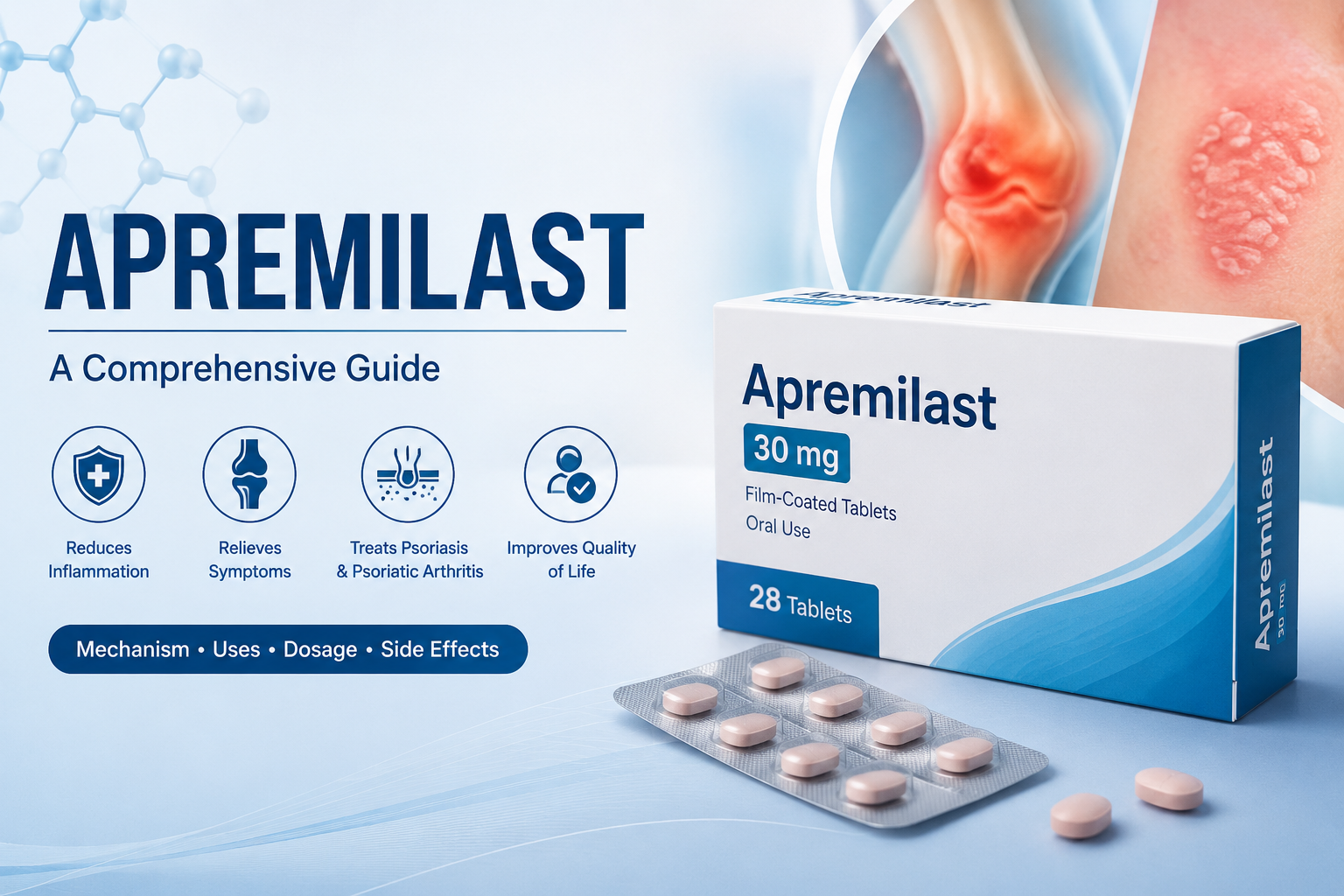


Apremilast is an oral targeted therapy categorized as a selective phosphodiesterase 4 (PDE4) inhibitor. It belongs to a class of disease-modifying anti-rheumatic and immunomodulatory medications used primarily in the management of chronic inflammatory autoimmune conditions. Unlike traditional immunosuppressants or biological therapies, Apremilast works at the cellular level by regulating specific chemical pathways inside cells to control inflammation.
What is Apremilast Used For?
Apremilast is prescribed for adult patients (and select pediatric populations) diagnosed with specific inflammatory conditions. Its primary clinical indications include:
• Plaque Psoriasis: Approved for adult and pediatric patients (6 years of age and older weighing at least 20 kg) with moderate-to-severe plaque psoriasis who are candidates for phototherapy or systemic therapy.
• Psoriatic Arthritis: Approved for adult patients with active psoriatic arthritis to reduce joint pain, swelling, and physical limitation.
• Oral Ulcers in Behçet's Disease: Used in adult patients with oral ulcers associated with Behçet’s disease who are candidates for systemic therapy.
How Does Apremilast Work?
In chronic inflammatory conditions, immune cells overproduce inflammatory signaling molecules (cytokines) that drive joint swelling, skin lesions, and tissue irritation.
Apremilast works through a distinct molecular mechanism:
• PDE4 Enzyme Inhibition: It selectively targets and inhibits the phosphodiesterase 4 (PDE4) enzyme, which is abundant inside inflammatory cells.
• Elevating Cyclic AMP (cAMP): Blocking PDE4 prevents the breakdown of cyclic adenosine monophosphate (cAMP), leading to an intracellular accumulation of cAMP.
• Regulating Cytokine Balance: Increased cAMP levels downregulate pro-inflammatory cytokines (such as TNF-alpha, IL-17, and IL-23) while promoting anti-inflammatory chemical signals, restoring natural immune homeostasis without broad immune suppression.
Benefits of Apremilast
• Targeted Anti-Inflammatory Action: Controls skin plaque formation and joint inflammation by balancing intracellular inflammatory cascades.
• Convenient Oral Administration: Taken orally as a tablet, eliminating the need for regular injections or clinical infusions required by biologic therapies.
• No Routine Laboratory Monitoring Requirement: Unlike many conventional systemic DMARDs (such as methotrexate), routine liver or blood cell count monitoring is generally not required for standard patients.
Available Strengths
Apremilast is available in standard oral film-coated tablet strengths to facilitate initial titration schedules and dosage adjustments:
• 10 mg tablets (often pink/red-coated)
• 20 mg tablets (often brown/red-coated)
• 30 mg tablets (often beige/yellow-coated)
(Extended-release 75 mg tablets are also available in select markets).
Recommended Dosage & Administration
Apremilast requires an initial 5-day titration schedule to reduce gastrointestinal side effects (such as nausea and diarrhea) before reaching the standard maintenance dose.
Standard Adult Titration Schedule (Days 1–5):
• Day 1: 10 mg in the morning
• Day 2: 10 mg in the morning and 10 mg in the evening
• Day 3: 10 mg in the morning and 20 mg in the evening
• Day 4: 20 mg in the morning and 20 mg in the evening
• Day 5: 20 mg in the morning and 30 mg in the evening
• Day 6 Onward (Maintenance Dose): 30 mg taken orally twice daily (morning and evening, approximately 12 hours apart).
Administration Rules:
• Food: Apremilast can be taken with or without food.
• Swallowing: Swallow tablets whole with water. Do not crush, break, or chew them.
• Severe Renal Impairment: Patients with severe kidney impairment (CrCl < 30 mL/min) require a reduced dose (30 mg once daily after an adjusted morning-only titration).
Missed Dose
If a dose is missed, take it as soon as remembered. However, if it is almost time for the next scheduled dose, skip the missed dose and resume your regular daily schedule. Do not take a double dose to make up for a missed tablet.
Common & Serious Side Effects
While Apremilast is well-tolerated by many patients, it is associated with specific gastrointestinal and neuropsychiatric adverse effects:
• Gastrointestinal Issues (Very Common): Diarrhea, nausea, vomiting, and upper abdominal discomfort are frequent, particularly during the first 2–4 weeks of treatment.
• Headache & Upper Respiratory Tract Symptoms: Mild to moderate headaches, tension headaches, nasopharyngitis, and upper respiratory tract infections.
• Weight Reduction: Unintended weight loss (5% to 10% of body weight) can occur in a small percentage of patients.
• Neuropsychiatric Effects (Depression & Mood Changes): Increases in depression, insomnia, and suicidal thoughts or behavior have been reported. Immediate medical consultation is required if mood changes occur.
• Hypersensitivity Reactions: Rare cases of severe allergic reactions, including angioedema and anaphylaxis.
Drug Interactions
Apremilast exposure can be significantly influenced by co-administration with enzyme-inducing medications:
• Strong Cytochrome P450 (CYP450) Inducers: Concurrent use with strong CYP450 inducers (e.g., rifampin, carbamazepine, phenobarbital, phenytoin, St. John’s Wort) significantly decreases Apremilast exposure in the blood, leading to a loss of efficacy. Co-administration is generally not recommended.
• Concomitant Systemic Immunosuppressants: Co-administration with potent biologic therapies or systemic immunosuppressants for psoriasis has not been extensively evaluated.
Pregnancy and Breastfeeding
• Embryo-Fetal Toxicity: Animal studies show an increased risk of fetal loss. Apremilast is not recommended during pregnancy. Females of childbearing potential should discuss pregnancy planning and effective contraception options with their physician before starting therapy.
• Breastfeeding: It is unknown whether Apremilast passes into human breast milk (though present in animal studies). Breastfeeding is generally contraindicated or not recommended during treatment.
Monitoring During Treatment
Healthcare providers typically incorporate the following safety evaluations during Apremilast therapy:
• Gastrointestinal Symptom Management: Early evaluation and dose modifications if severe diarrhea, nausea, or vomiting persists beyond initial weeks.
• Weight Monitoring: Regular tracking of body weight; clinically significant weight loss requires medical evaluation.
• Neuropsychiatric Screening: Baseline and ongoing assessments for new or worsening depression, suicidal ideation, or mood alterations.
• Renal Function Evaluation: Assessment of baseline kidney function to determine if dose adjustments are necessary.
Generic Apremilast
Generic versions of Apremilast are produced globally in compliance with international quality and regulatory standards:
• Cost-Effectiveness: Offers a significantly more affordable option compared to brand-name preparations (such as Otezla).
• Therapeutic Equivalence: Contains the identical active pharmaceutical ingredient (API), delivering equivalent clinical safety, binding profiles, and therapeutic outcomes.
• Global Access: Expands affordable availability for patients requiring long-term oral management of autoimmune skin and joint conditions.
Frequently Asked Questions (FAQs)
Is Apremilast a steroid or a biologic?
No. Apremilast is an oral small-molecule phosphodiesterase 4 (PDE4) inhibitor. It is neither a steroid nor a biologic injection.
Should I take Apremilast with food?
Apremilast can be taken with or without food. Food does not significantly alter its absorption in the body.
Why is there a starter pack/titration period for Apremilast?
Starting at a low dose (10 mg once daily) and gradually increasing over 5 days helps your digestive system adjust to the medication, reducing the severity of initial nausea and diarrhea.
Important Safety Information
This article is intended for educational purposes only and does not substitute for expert medical advice. Always consult a qualified dermatologist, rheumatologist, or healthcare professional before initiating, adjusting, or stopping Apremilast therapy.
References
• U.S. Food and Drug Administration (FDA) Prescribing Information (Otezla)
• European Medicines Agency (EMA) Drug Assessment Reports
• National Center for Biotechnology Information (NCBI) StatPearls - Apremilast
• American Academy of Dermatology (AAD) & American College of Rheumatology (ACR) Guidelines
Contact Us
Are you searching for Generic Apremilast, wholesale pricing structures, global availability, or export documentation?
Our expert team is fully equipped to guide you through trusted manufacturer selections, product availability, international licensing, and country-specific import regulations. Contact us today to learn more.
What is Apremilast?
Apremilast is an oral targeted therapy categorized as a selective phosphodiesterase 4 (PDE4) inhibitor. It belongs to a class of disease-modifying anti-rheumatic and immu…