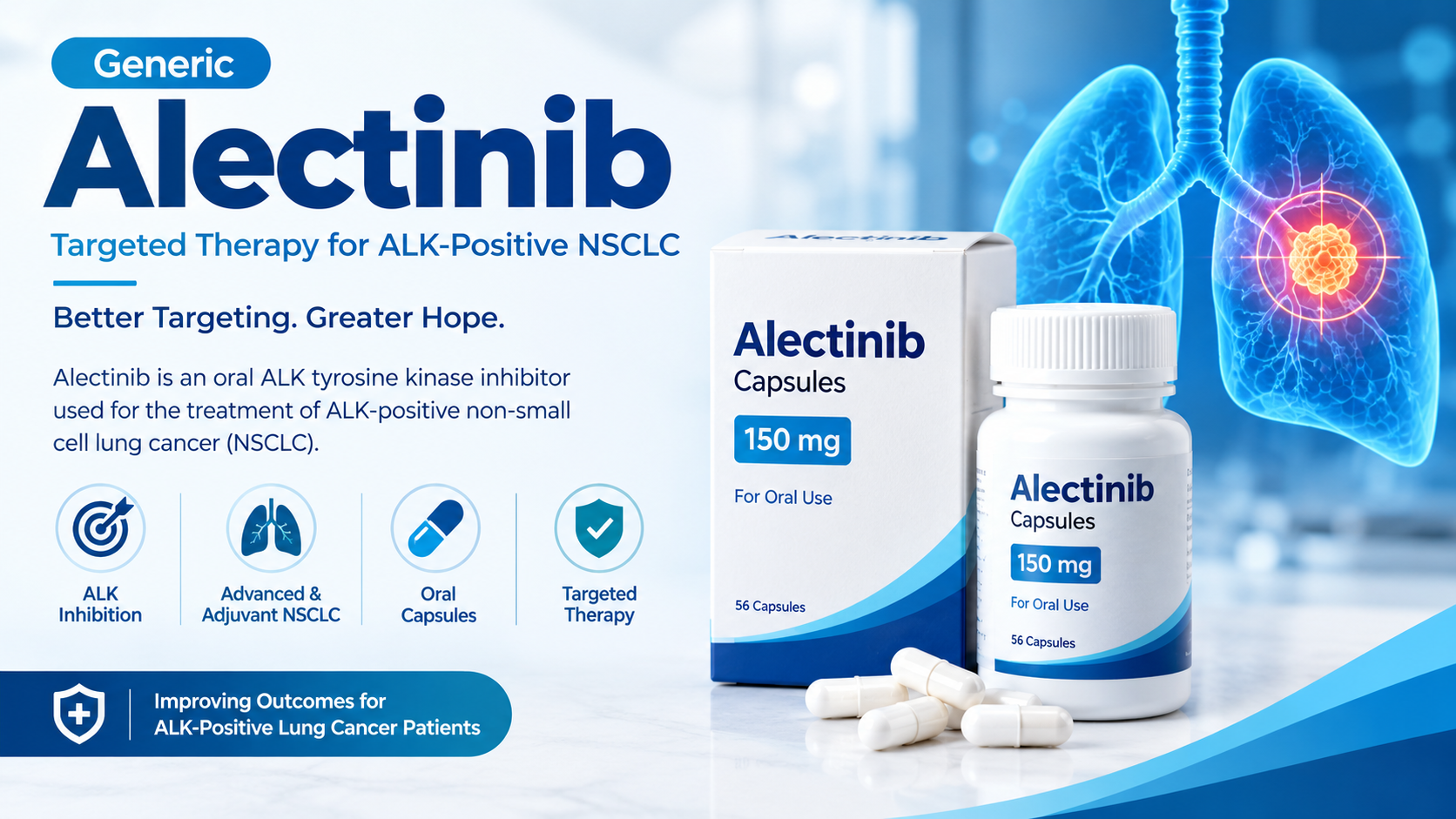


Alectinib is an oral targeted anticancer medicine categorized as an anaplastic lymphoma kinase (ALK) tyrosine kinase inhibitor (TKI). It belongs to a modern class of targeted therapies used primarily in the treatment of ALK-positive non-small cell lung cancer (NSCLC).
Alectinib works by selectively blocking abnormal ALK signaling, which can drive the growth and spread of cancer cells. By inhibiting ALK activity, Alectinib helps slow or stop the proliferation of ALK-positive cancer cells.
Alectinib is available as the hydrochloride salt and is marketed under the brand name Alecensa, as well as by various manufacturers as generic Alectinib.
What is Alectinib Used For?
Alectinib is primarily prescribed for adult patients whose NSCLC has been confirmed to be ALK-positive.
Its major clinical indications include:
• Adjuvant Treatment of NSCLC: Used after complete surgical removal of the tumor in adults with ALK-positive NSCLC who are considered at high risk of recurrence.
• Advanced ALK-Positive NSCLC: Used as a first-line treatment for adults with advanced ALK-positive NSCLC.
• Previously Treated Advanced NSCLC: Used in adults with ALK-positive advanced NSCLC whose disease has previously been treated with crizotinib.
ALK positivity should be confirmed using an appropriate validated diagnostic test before treatment is initiated.
How Does Alectinib Work?
Alectinib works through a targeted molecular mechanism:
• ALK Inhibition: Alectinib selectively inhibits the activity of the ALK tyrosine kinase.
• Blocking Cancer Signaling: ALK abnormalities can continuously activate signaling pathways involved in cancer-cell growth and survival.
• Inhibiting Tumor Growth: By blocking ALK signaling, Alectinib reduces the proliferation and survival of ALK-positive cancer cells.
• Targeted Therapy: Because it specifically targets abnormal ALK activity, Alectinib is considered a targeted cancer therapy rather than conventional cytotoxic chemotherapy.
Benefits of Alectinib
• Targeted Anticancer Activity: Specifically targets abnormal ALK signaling in ALK-positive NSCLC.
• Oral Administration: Available as oral capsules, allowing treatment without routine intravenous infusion.
• Use in Different Treatment Settings: Can be used for advanced disease and, in appropriate patients, as adjuvant therapy following complete tumor resection.
• Activity in ALK-Positive NSCLC: Clinical studies have demonstrated benefit in patients with ALK-positive advanced NSCLC, including patients previously treated with crizotinib.
Available Strengths
Alectinib is commonly available as an oral hard capsule containing:
• 150 mg capsules
The standard adult treatment regimen uses multiple 150 mg capsules per dose.
Recommended Dosage & Administration
The recommended dosage depends on the treatment setting and the patient's individual clinical condition.
Standard Adult Dosing
• Advanced ALK-Positive NSCLC: 600 mg orally twice daily with food, equivalent to four 150 mg capsules per dose.
• Adjuvant Treatment After Complete Tumor Resection: 600 mg orally twice daily with food.
For adjuvant treatment, therapy is generally continued for 2 years, unless the cancer recurs or unacceptable toxicity occurs. For advanced NSCLC, treatment is generally continued until disease progression or unacceptable toxicity.
Severe Hepatic Impairment
For patients with severe hepatic impairment (Child-Pugh C), the recommended starting dose is 450 mg twice daily with food. Dose adjustments may also be required depending on treatment-related adverse reactions.
Administration Rules
• Food: Alectinib should be taken with food.
• Frequency: The prescribed dose should generally be taken twice daily at approximately the same times each day.
• Consistency: Patients should follow the prescribed dosing schedule and should not change the dose without medical supervision.
Missed Dose
If a dose is missed or vomiting occurs after taking Alectinib, patients should follow the instructions provided by their treating physician or the product information. Do not take an extra dose to compensate for a missed dose unless specifically instructed by a healthcare professional.
Common & Serious Side Effects
Alectinib may cause side effects, and patients should be monitored regularly during treatment.
Commonly reported adverse effects include:
• Musculoskeletal Effects: Muscle pain, muscle weakness, and elevated creatine phosphokinase (CPK).
• Liver Abnormalities: Increased liver enzymes and bilirubin levels.
• Anemia: Reduced red blood cell levels.
• Constipation: Gastrointestinal discomfort and constipation may occur.
• Edema: Swelling, particularly peripheral edema.
• Weight Gain: Increased body weight may occur in some patients.
EMA identifies constipation, muscle pain, edema, anemia, increased bilirubin, and elevated liver enzymes among the common adverse effects associated with Alectinib.
Serious adverse reactions may include:
• Severe liver toxicity
• Interstitial lung disease/pneumonitis
• Severe muscle injury or rhabdomyolysis
• Bradycardia
• Severe anemia or other blood abnormalities
Patients should promptly report unusual breathing difficulties, severe muscle pain or weakness, jaundice, dark urine, fainting, or significant changes in heart rate to their healthcare provider.
Drug Interactions
Alectinib can interact with medicines that affect its metabolism or may increase the risk of adverse effects.
Important considerations include:
• CYP3A Inhibitors: Strong CYP3A inhibitors may increase Alectinib exposure.
• CYP3A Inducers: Strong CYP3A inducers may reduce Alectinib concentrations and potentially decrease its therapeutic effect.
• Heart-Rate-Lowering Medicines: Because Alectinib may cause bradycardia, medicines that also reduce heart rate should be used carefully.
• Other Hepatotoxic Medicines: Concurrent medicines that can affect liver function may require additional monitoring.
Patients should inform their physician about all prescription medicines, over-the-counter medicines, vitamins, and herbal products before starting Alectinib.
Pregnancy and Breastfeeding
Alectinib may cause fetal harm based on its pharmacological effects and available non-clinical data.
• Pregnancy: Women who can become pregnant should discuss appropriate contraception with their healthcare provider during treatment and for the recommended period after the final dose.
• Breastfeeding: Breastfeeding is generally not recommended during Alectinib treatment and for the recommended period following the last dose.
Patients who are pregnant, planning pregnancy, or breastfeeding should consult their oncologist before using Alectinib.
Monitoring During Treatment
Patients receiving Alectinib require regular clinical and laboratory monitoring.
Important monitoring may include:
• Liver Function: ALT, AST, bilirubin, and other liver parameters.
• Creatine Phosphokinase (CPK): Monitoring for muscle injury or myopathy.
• Heart Rate: Monitoring for clinically significant bradycardia.
• Blood Counts: Periodic monitoring for anemia and other hematological abnormalities.
• Respiratory Symptoms: Evaluation of new or worsening cough, shortness of breath, or other symptoms suggestive of interstitial lung disease/pneumonitis.
Regular follow-up allows physicians to identify adverse reactions early and adjust or interrupt treatment when necessary.
Generic Alectinib
Generic Alectinib products contain alectinib as the active pharmaceutical ingredient and are developed to provide an alternative to branded Alectinib products such as Alecensa.
Key advantages may include:
• Cost-Effectiveness: Generic formulations can provide a more affordable treatment option where approved and available.
• Same Active Ingredient: Authorized generic products contain the same active pharmaceutical ingredient, alectinib.
• Global Availability: Generic Alectinib may be available from manufacturers in different regulated pharmaceutical markets.
• Quality Standards: Patients and healthcare providers should select products manufactured by appropriately licensed facilities and approved by the relevant national regulatory authority.
Alectinib 150 mg hard capsules have specific bioequivalence guidance from the European Medicines Agency, supporting standardized development of generic formulations.
Frequently Asked Questions (FAQs)
Is Alectinib a chemotherapy drug?
No. Alectinib is a targeted molecular therapy and ALK tyrosine kinase inhibitor. It works by selectively blocking abnormal ALK signaling rather than acting as conventional cytotoxic chemotherapy.
What type of cancer is Alectinib used for?
Alectinib is primarily used for ALK-positive non-small cell lung cancer (NSCLC) in appropriate adult patients.
How should Alectinib be taken?
Alectinib is taken orally twice daily with food, according to the prescribed dose. The standard adult dose is 600 mg twice daily.
How long is Alectinib treatment continued?
For advanced NSCLC, treatment is generally continued until disease progression or unacceptable toxicity. In the adjuvant setting after complete tumor removal, Alectinib is generally administered for 2 years, unless recurrence or unacceptable side effects occur.
Does Alectinib require an ALK test?
Yes. ALK-positive status should be confirmed using an appropriate validated diagnostic test before initiating treatment.
Important Safety Information
Alectinib is a prescription anticancer medicine that should be initiated and monitored by an experienced oncology professional. The dosage and treatment duration must be individualized according to the patient's cancer status, liver function, other medicines, and treatment response.
This article is intended for educational and informational purposes only and does not replace professional medical advice. Patients should not start, stop, or modify Alectinib treatment without consulting their treating oncologist.
References
• European Medicines Agency (EMA) – Alecensa Product Information
• European Medicines Agency (EMA) – Alecensa EPAR
• European Medicines Agency (EMA) – Alectinib Product-Specific Bioequivalence Guidance
Contact Us
Are you searching for Generic Alectinib, wholesale pricing, global availability, manufacturer information, or export documentation?
Our expert team can assist with product availability, manufacturer selection, pharmaceutical documentation, wholesale requirements, and country-specific import considerations. Contact us today to learn more about available Generic Alectinib 150 mg products.
What is Alectinib?
Alectinib is an oral targeted anticancer medicine categorized as an anaplastic lymphoma kinase (ALK) tyrosine kinase inhibitor (TKI). It belongs to a modern class of targ…