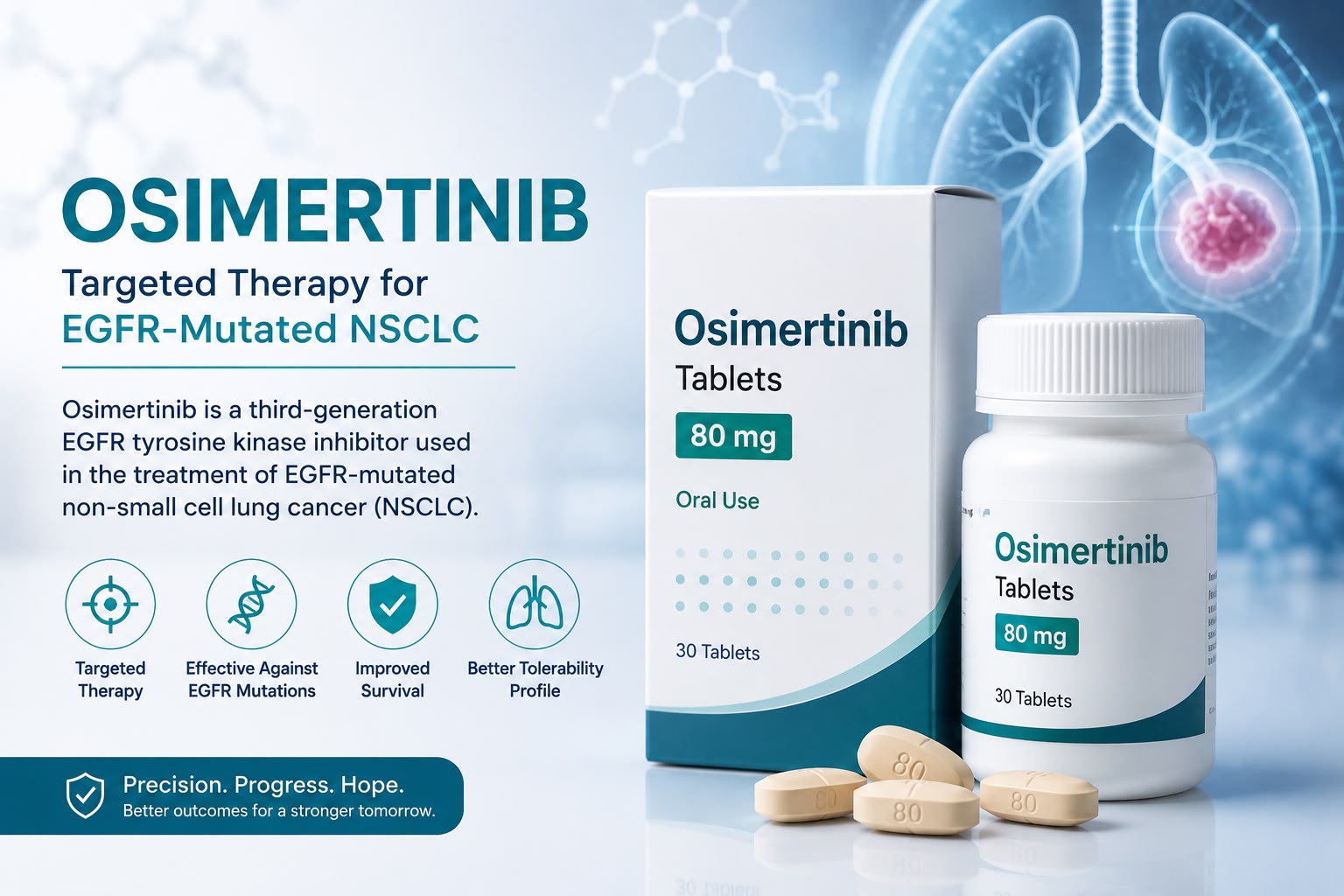


Osimertinib is a third-generation epidermal growth factor receptor (EGFR) tyrosine kinase inhibitor (TKI) used for the treatment of specific types of EGFR mutation-positive non-small cell lung cancer (NSCLC). It is a precision medicine designed to target cancer cells carrying specific EGFR mutations while minimizing damage to healthy cells compared with conventional chemotherapy.
It is prescribed only after molecular testing confirms the presence of an eligible EGFR mutation. Osimertinib has become one of the most important targeted therapies for EGFR-positive lung cancer because of its proven effectiveness in delaying disease progression, improving progression-free survival, and helping control cancer that has spread to the brain.
What is Osimertinib Used For?
Osimertinib is indicated for adults with EGFR mutation-positive NSCLC in several clinical settings, including:
• Early-stage NSCLC after complete tumor removal (adjuvant therapy)
• Locally advanced NSCLC that cannot be removed surgically
• Metastatic NSCLC with confirmed EGFR mutations
• Advanced NSCLC with EGFR exon 19 deletion or exon 21 (L858R) substitution mutations
• Patients whose cancer has spread to the central nervous system (brain metastases), when considered appropriate by the treating oncologist
Treatment should always be individualized based on molecular testing, disease stage, overall health, and current clinical practice guidelines.
How Does Osimertinib Work?
Many lung cancers develop because of mutations in the EGFR gene. These mutations continuously activate signals that instruct cancer cells to grow, divide, and spread.
Osimertinib selectively blocks abnormal EGFR signaling by irreversibly inhibiting mutated EGFR proteins, including the resistance-associated T790M mutation. This targeted action helps:
• Slow cancer growth
• Reduce tumor progression
• Prevent cancer cell multiplication
• Delay disease progression
• Improve progression-free survival in eligible patients
• Penetrate the blood-brain barrier, allowing activity against brain metastases
Unlike traditional chemotherapy, Osimertinib specifically targets cancer-driving mutations, resulting in a more precise treatment approach.
Benefits of Osimertinib
Clinical studies have shown several important benefits in appropriate patients:
• Highly effective against EGFR-mutated NSCLC
• Delays disease progression
• Helps shrink tumors in many patients
• Effective against certain brain metastases
• Oral tablet taken once daily
• Lower risk of some chemotherapy-related side effects
• Can improve quality of life in eligible patients
Treatment outcomes vary between individuals.
Who Should Receive Osimertinib?
Osimertinib may be appropriate for patients who:
• Have confirmed EGFR mutation-positive NSCLC
• Have undergone approved molecular testing
• Are considered suitable candidates by an oncologist
• Require first-line targeted therapy
• Require adjuvant therapy following surgery
• Have advanced or metastatic disease
Patients should never self-medicate with Osimertinib.
Available Strengths
Osimertinib tablets are commonly available in:
• 40 mg tablets
• 80 mg tablets
The appropriate strength depends entirely on the patient's treatment plan.
Recommended Dosage
The usual adult recommended dosage is 80 mg orally once daily, although dose adjustments may be required based on adverse reactions or individual clinical circumstances.
General administration instructions:
• Take exactly as prescribed.
• Swallow the tablet whole with water.
• May be taken with or without food.
• Take it at the same time each day.
• Do not crush, chew, or split the tablet unless specifically instructed.
• Continue treatment until disease progression or unacceptable toxicity occurs, unless advised otherwise by your physician.
Always follow your oncologist's instructions.
Missed Dose
If a dose is missed:
• Take it as soon as remembered if there are more than 12 hours before the next scheduled dose.
• If the next dose is due within 12 hours, skip the missed dose.
• Never take two doses together.
Consult your healthcare provider if you are unsure.
Common Side Effects
Like all medicines, Osimertinib may cause side effects.
Commonly reported reactions include:
• Diarrhea
• Acne-like skin rash
• Dry skin
• Nail inflammation
• Mouth sores
• Fatigue
• Loss of appetite
• Itching
• Mild nausea
• Constipation
• Hair thinning
• Cough
Most side effects are mild to moderate and manageable with appropriate supportive care.
Drug Interactions
Certain medicines can affect how Osimertinib works or increase the risk of side effects.
Inform your doctor if you take:
• Prescription medicines
• Over-the-counter drugs
• Herbal supplements
• Vitamins
• Anticonvulsants
• Rifampicin
• St. John's Wort
• Certain antifungal medicines
• Macrolide antibiotics
Never start or stop any medication without medical advice.
Pregnancy and Breastfeeding
Osimertinib may harm an unborn baby.
Patients should discuss effective contraception before treatment.
Breastfeeding is generally not recommended during treatment and for the recommended period after the last dose according to prescribing information.
Monitoring During Treatment
Doctors may regularly monitor:
• Lung function
• Heart rhythm
• Liver function
• Kidney function
• Blood counts
• Treatment response through imaging
• Side effects
Regular follow-up helps maximize treatment safety.
Storage Instructions
Store Osimertinib:
• At room temperature
• Below the temperature specified by the manufacturer
• Away from moisture
• Away from direct sunlight
• In the original packaging
• Out of reach of children
Generic Osimertinib
Generic Osimertinib contains the same active ingredient as the reference product and is intended to meet applicable regulatory standards where approved.
Potential advantages include:
• Lower treatment cost
• Improved patient access
• Same active pharmaceutical ingredient
• Available from multiple manufacturers in many countries
• Suitable for long-term therapy where approved
Availability varies by country and local regulatory requirements.
Who Should Not Take Osimertinib?
Osimertinib may not be suitable for everyone. Patients with severe allergic reactions to the medicine, certain heart rhythm disorders, or serious lung conditions should discuss the risks with their healthcare provider. Treatment decisions should always be made by an experienced oncologist after evaluating the patient's overall health and medical history.
Foods and Lifestyle Tips During Treatment
While taking Osimertinib, patients should:
• Stay well hydrated.
• Eat a balanced diet rich in protein.
• Avoid smoking.
• Limit alcohol intake unless approved by the treating physician.
• Exercise regularly as tolerated.
• Protect the skin from excessive sunlight.
• Use moisturizing creams if dry skin develops.
• Report persistent diarrhea or fever immediately.
How Long Does Osimertinib Take to Work?
The response varies among patients. Some individuals experience improvement within the first few weeks, while others require several months before imaging studies demonstrate tumor shrinkage or disease stabilization. Regular CT scans and medical follow-up are essential for monitoring treatment response.
Clinical Advantages
Compared with earlier EGFR inhibitors, Osimertinib offers several advantages:
• Targets common activating EGFR mutations.
• Effective against many tumors with the T790M resistance mutation.
• Better penetration into the central nervous system.
• Convenient once-daily oral dosing.
• Demonstrated improvements in progression-free survival in appropriate patient populations.
Frequently Asked Questions (FAQs)
Is Osimertinib chemotherapy?
No. It is a targeted therapy known as an EGFR tyrosine kinase inhibitor (TKI).
Can Osimertinib cure lung cancer?
It is not considered a cure for advanced NSCLC. However, it can significantly control disease progression and improve outcomes in eligible patients.
Can it be taken with food?
Yes. It may be taken with or without food.
Is genetic testing necessary?
Yes. Treatment should only begin after confirmation of an appropriate EGFR mutation using an approved diagnostic test.
Is a prescription required?
Yes. Osimertinib is available only with a prescription.
Can patients continue normal activities?
Many patients can continue daily activities during treatment, although side effects may require adjustments. Always follow your doctor's advice.
Important Safety Information
This article is intended solely for educational purposes and should not replace professional medical advice, diagnosis, or treatment. Always consult a qualified oncologist before starting, changing, or discontinuing Osimertinib therapy. Treatment decisions should be based on individual medical history, diagnostic testing, and current clinical guidelines.
References
• National Comprehensive Cancer Network (NCCN) Clinical Practice Guidelines in Oncology
• U.S. Food and Drug Administration (FDA) Prescribing Information
• European Medicines Agency (EMA)
• American Society of Clinical Oncology (ASCO)
• Peer-reviewed oncology journals and published clinical trials
Contact Us
Looking for Generic Osimertinib, wholesale pricing, international availability, or export information?
Our team can provide the latest information regarding product availability, manufacturer options, documentation requirements, and country-specific supply. Availability is subject to local regulations and import policies.
What is Osimertinib?
Osimertinib is a third-generation epidermal growth factor receptor (EGFR) tyrosine kinase inhibitor (TKI) used for the treatment of specific types of EGFR mutation-positi…