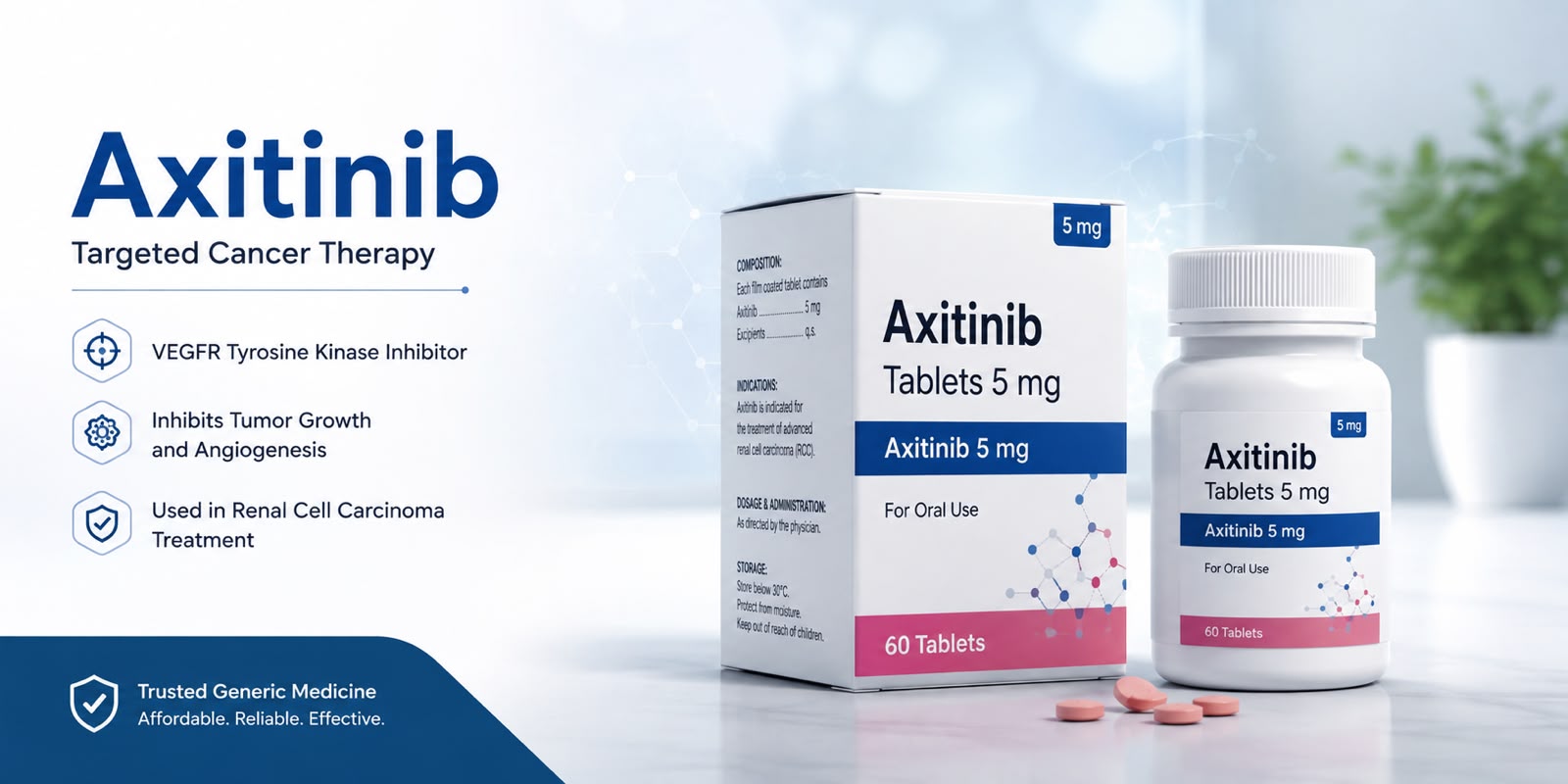


Axitinib is an advanced targeted oral antineoplastic medication categorized as a second-generation multi-targeted receptor tyrosine kinase (RTK) inhibitor. It belongs to a modern class of precision targeted therapies used primarily in the management of advanced kidney cancer (Renal Cell Carcinoma).
Engineered to be exceptionally potent and selective, Axitinib acts at sub-nanomolar concentrations to block specific vascular growth factor receptors that drive tumor angiogenesis—the process by which cancer cells grow new blood vessels to supply themselves with oxygen and nutrients.
What is Axitinib Used For?
Axitinib is prescribed for adult patients for the treatment and clinical management of advanced kidney cancer. Its primary clinical indications include:
• Advanced Renal Cell Carcinoma (RCC):
o Monotherapy: Approved for the treatment of advanced RCC after failure of one prior systemic therapy (such as a cytokine or another receptor tyrosine kinase inhibitor).
o Combination Therapy: Approved as a first-line treatment for advanced RCC in combination with immune checkpoint inhibitors (such as pembrolizumab or avelumab).
How Does Axitinib Work?
For solid kidney tumors to expand and metastasize, they require continuous blood vessel development. Axitinib operates through a targeted molecular mechanism:
• Potent Selective Inhibition of VEGFR: Axitinib selectively inhibits Vascular Endothelial Growth Factor Receptors VEGFR-1, VEGFR-2, and VEGFR-3. It is significantly more selective against VEGFRs compared to earlier, broader multi-kinase inhibitors.
• Blockade of Angiogenesis: By blocking VEGF binding and receptor autophosphorylation, Axitinib effectively cuts off the chemical signals that prompt endothelial cells to build new blood vessel networks feeding the tumor.
• Suppression of Tumor Growth: Starved of vital blood supply and oxygen, tumor growth slows down, tumor microvasculature regresses, and disease progression is delayed.
Benefits of Axitinib
• High Target Selectivity & Potency: Exhibits high binding affinity for VEGFRs, enabling potent inhibition of tumor angiogenesis with reduced off-target activity.
• Proven Clinical Efficacy: Demonstrates significant improvement in progression-free survival (PFS) both as a second-line monotherapy and as a first-line combination agent in advanced RCC.
• Flexible Twice-Daily Oral Regimen: Formulated as an oral tablet taken twice daily, allowing for precise dose titration up or down based on individual patient tolerance and blood pressure responses.
Available Strengths
Axitinib is manufactured as oral film-coated tablets in precise strengths to support flexible step-up or step-down dosing protocols:
• 1 mg film-coated tablets
• 3 mg film-coated tablets
• 5 mg film-coated tablets
Recommended Dosage & Administration
Dosing schedules are tailored according to whether Axitinib is given as monotherapy or in combination, as well as individual patient tolerability.
Standard Adult Dosage Guidelines
• Starting Dose: The standard initial dose is 5 mg orally taken twice daily (approximately 12 hours apart).
• Dose Titration: Depending on individual tolerance (specifically whether blood pressure remains well-controlled without severe adverse reactions), the dose may be stepped up gradually to 7 mg twice daily, and up to a maximum of 10 mg twice daily. Conversely, if toxicity occurs, the dose can be reduced to 3 mg twice daily or 2 mg twice daily.
Administration Rules
• With or Without Food: Axitinib can be taken with or without food.
• Swallow Whole: Tablets should be swallowed whole with a glass of water. Do not crush, split, or chew the tablets.
• Consistency is Key: Take your doses approximately 12 hours apart at the same time every day to maintain steady blood levels.
Missed Dose
• If a dose is missed, skip the missed dose and take the next scheduled dose at your regular time. Do not take two doses at once to make up for a missed dose.
Common & Serious Side Effects
While Axitinib provides targeted anti-angiogenic activity, regular clinical oversight is required to manage potential adverse reactions:
• Hypertension (High Blood Pressure): One of the most common and significant side effects. Blood pressure must be well-controlled before starting treatment and monitored frequently.
• Gastrointestinal Effects: Diarrhea, nausea, vomiting, decreased appetite, stomatitis/mouth sores, and abdominal pain.
• Fatigue & Dysphonia: General tiredness/asthenia and voice changes or hoarseness (dysphonia).
• Palmar-Plantar Erythrodysesthesia (Hand-Foot Syndrome): Redness, swelling, pain, or peeling on the palms of the hands and soles of the feet.
• Thromboembolic & Bleeding Events: Increased risk of arterial/venous blood clots (e.g., DVT, pulmonary embolism, myocardial infarction) and hemorrhagic events.
• Gastrointestinal Perforation & Fistula: Rare but serious risk of tears or abnormal passages developing in the stomach or intestinal wall.
• Proteinuria & Thyroid Dysfunction: Protein in the urine and hypothyroidism, requiring routine lab checks.
Drug Interactions
Axitinib is predominantly metabolized in the liver by CYP3A4/5 enzymes, with minor contributions from CYP1A2, CYP2C19, and UGT1A1:
• Strong CYP3A4 Inhibitors: Drugs such as ketoconazole, clarithromycin, itraconazole, or grapefruit/grapefruit juice increase Axitinib exposure in the bloodstream, elevating the risk of toxicity. Co-administration should be avoided or require an Axitinib dose reduction.
• Strong CYP3A4 Inducers: Drugs like rifampin, carbamazepine, St. John’s Wort, and phenytoin lower Axitinib blood concentrations, potentially diminishing therapeutic efficacy. Co-administration should be avoided.
• Antihypertensive Agents: Patients taking Axitinib frequently require initiation or adjustment of blood pressure medications.
Pregnancy and Breastfeeding
• Embryo-Fetal Toxicity: Axitinib can cause fetal harm and birth defects when administered to pregnant women due to its anti-angiogenic properties. Females of reproductive potential should use effective contraception during treatment and for at least 1 week after the final dose. Male patients with female partners of reproductive potential should also use effective contraception during and for 1 week after the last dose.
• Breastfeeding: Breastfeeding is not recommended during treatment with Axitinib and for at least 2 weeks after the final dose due to potential adverse effects on the nursing infant.
Monitoring During Treatment
Routine clinical evaluations ensure early detection and management of treatment-related toxicities:
• Blood Pressure Tracking: Baseline blood pressure evaluation prior to therapy, followed by frequent monitoring throughout treatment (especially during the first few weeks).
• Thyroid Function Tests: Baseline and periodic monitoring of thyroid-stimulating hormone (TSH) levels.
• Renal Function & Urinalysis: Serum creatinine checks and urine protein tracking (for proteinuria) before and during therapy.
• Liver Function Tests (LFTs): Periodic checks of serum ALT, AST, and bilirubin levels.
• Cardiovascular & Clotting Assessments: Monitoring for signs of chest pain, shortness of breath, severe leg swelling, or unusual bleeding.
Generic Axitinib
Generic formulations of Axitinib are produced globally in compliance with strict international pharmaceutical standards:
• Cost-Effectiveness: Offers an affordable and accessible alternative compared to the brand-name drug (Inlyta).
• Therapeutic Equivalence: Formulated with the exact active pharmaceutical ingredient (API), delivering bioequivalent safety, quality, and clinical efficacy.
• Expanded Global Access: Increases access to advanced targeted kidney cancer treatments for healthcare systems and patients worldwide.
Frequently Asked Questions (FAQs)
Is Axitinib a type of traditional chemotherapy?
No. Axitinib is a targeted therapy (vascular endothelial growth factor receptor inhibitor). Unlike traditional chemotherapy, which targets rapidly dividing cells throughout the body, Axitinib specifically targets key signaling pathways responsible for blood vessel growth in solid tumors.
What should I do if my blood pressure increases while taking Axitinib?
High blood pressure is a known effect of VEGFR inhibitors. Your oncology team will monitor your blood pressure regularly and may prescribe or adjust antihypertensive medications. If your blood pressure remains high, your doctor may temporarily pause or reduce your Axitinib dose.
Can I drink grapefruit juice while on Axitinib?
No. Grapefruit and grapefruit juice inhibit the CYP3A4 enzymes responsible for breaking down Axitinib, which can lead to dangerously elevated levels of the drug in your system and increase severe side effects.
Important Safety Information
This article is intended for educational purposes only and does not substitute for expert medical advice. Always consult a qualified oncologist or healthcare specialist before initiating, adjusting, or stopping Axitinib therapy.
References
• U.S. Food and Drug Administration (FDA) Prescribing Information (Inlyta / Axitinib)
• National Comprehensive Cancer Network (NCCN) Clinical Practice Guidelines in Oncology: Kidney Cancer
• European Society for Medical Oncology (ESMO) Clinical Practice Guidelines for Renal Cell Carcinoma
Contact Us
Are you searching for Generic Axitinib, wholesale pricing structures, global availability, or export documentation?
Our expert team is fully equipped to guide you through trusted manufacturer selections, product availability, international licensing, and country-specific import regulations. Contact us today to learn more.
What is Axitinib?
Axitinib is an advanced targeted oral antineoplastic medication categorized as a second-generation multi-targeted receptor tyrosine kinase (RTK) inhibitor. It belongs to…