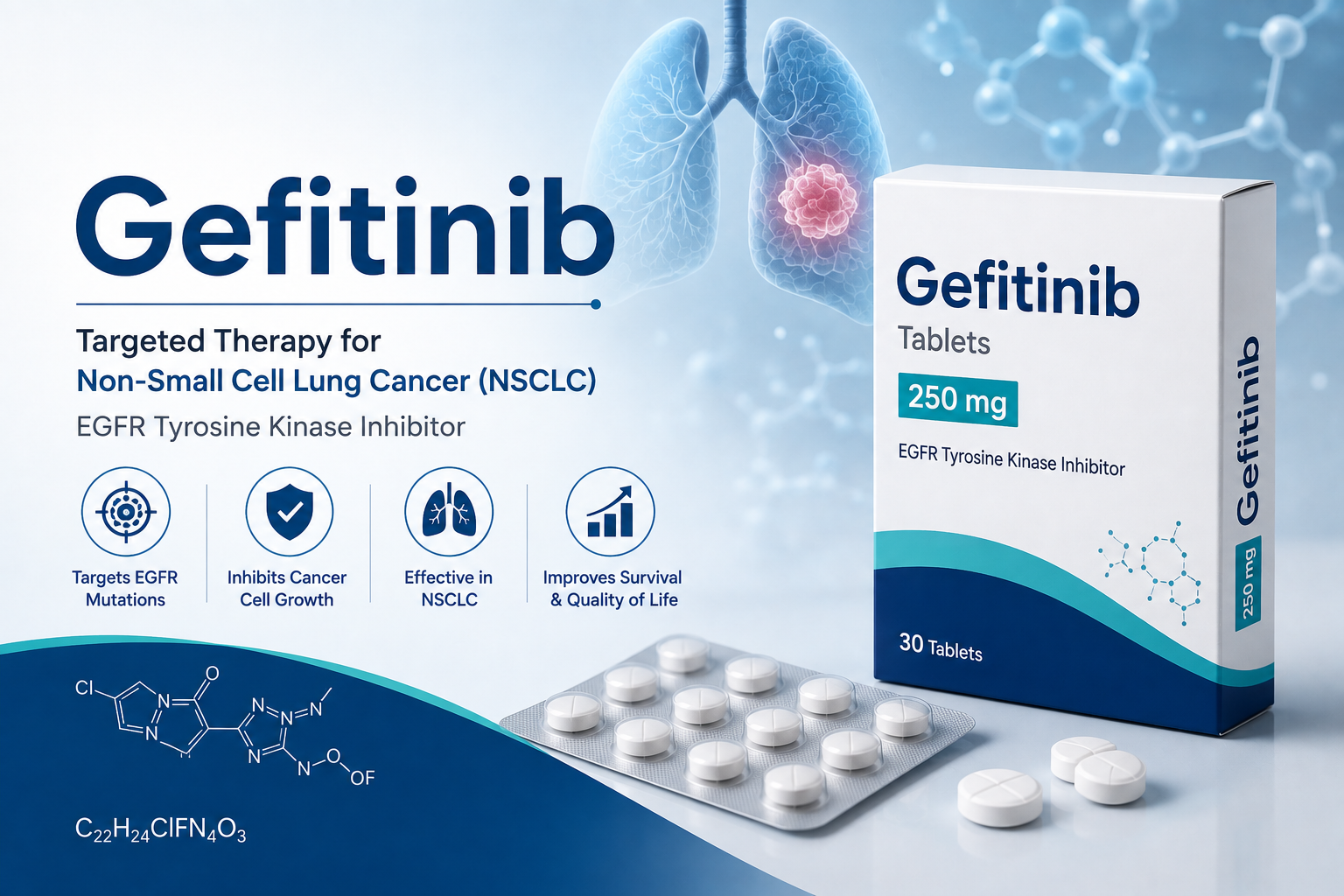


Gefitinib (sold under the brand name Iressa) is a targeted antineoplastic medication categorized as a first-generation epidermal growth factor receptor (EGFR) tyrosine kinase inhibitor (TKI). It represents a significant breakthrough in precision oncology, offering targeted oral therapy for specific solid tumors driven by mutated EGFR signaling pathways.
By selectively blocking intracellular signals that instruct cancer cells to multiply and survive, Gefitinib slows tumor progression while sparing patients many of the systemic side effects associated with traditional cytotoxic chemotherapy.
What is Gefitinib Used For?
Gefitinib is indicated as monotherapy for adult patients for the treatment and management of advanced or metastatic solid tumors:
• Non-Small Cell Lung Cancer (NSCLC):
o First-Line Therapy: For patients with metastatic NSCLC whose tumors harbor specific activating EGFR mutations—most commonly exon 19 deletions or exon 21 (L858R) substitution mutations.
o Targeted Patient Selection: Diagnostic biomarker testing (EGFR mutation status) is mandatory prior to initiating treatment to confirm drug responsiveness.
How Does Gefitinib Work?
The Epidermal Growth Factor Receptor (EGFR) is a cell-surface receptor protein involved in normal cell growth and survival. In specific lung cancers, activating EGFR mutations cause the kinase domain to become hyperactive, driving uncontrolled cellular division and tumor survival.
Gefitinib operates through a targeted molecular mechanism:
• Competitive Binding: Gefitinib binds reversibly to the adenosine triphosphate (ATP)-binding site located within the intracellular tyrosine kinase domain of the EGFR protein.
• Autophosphorylation Blockade: By competing with ATP, it prevents receptor autophosphorylation and shuts down critical downstream signaling pathways (such as RAS/RAF/MAPK and PI3K/Akt).
• Apoptosis & Proliferation Arrest: Halting these survival signals triggers cell cycle arrest and promotes programmed cell death (apoptosis) in EGFR-dependent tumor cells.
Benefits of Gefitinib
• Targeted Precision: Specifically acts on cancer cells expressing activating EGFR mutations, yielding superior response rates and progression-free survival (PFS) compared to standard chemotherapy in mutation-positive patients.
• Chemotherapy-Free Monotherapy: Provides a convenient daily oral alternative to systemic cytotoxic intravenous chemotherapy regimens.
• Improved Quality of Life: Generally well-tolerated with a favorable side-effect profile compared to historical chemotherapy options.
Available Strengths
Gefitinib is formulated as single-agent film-coated oral tablets:
• 250 mg film-coated tablets (Standard daily dose)
Recommended Dosage & Administration
Gefitinib is administered as an oral daily tablet for long-term targeted cancer management.
Standard Adult Dosage Guidelines
• Standard Daily Dose: One 250 mg tablet taken orally once daily.
• Duration: Continued until disease progression or unacceptable drug toxicity occurs.
Crucial Administration Rules
• With or Without Food: Can be taken with meals or on an empty stomach at roughly the same time each day.
• Swallow Whole or Disperse: Tablets should ideally be swallowed whole with water.
• Alternative Dispersion Method: For patients with swallowing difficulties (dysphagia), the 250 mg tablet can be dropped into half a glass of plain, non-carbonated drinking water (without crushing). Stir/swirl for approximately 15–20 minutes until fully dispersed, and drink immediately. Rinse the glass with water and drink the remainder to ensure full dosage delivery.
Missed Dose
• If a dose is missed, take it as soon as remembered if it is at least 12 hours before the next scheduled dose. If less than 12 hours remain, skip the missed dose and resume your regular daily schedule. Do not take two doses at once.
Common & Serious Side Effects
Gefitinib exhibits a characteristic adverse event profile primarily linked to EGFR inhibition in healthy epithelial tissues (such as the skin and GI tract):
• Common Side Effects:
o Dermatologic: Acneiform skin rash, dry skin, pruritus (itching), erythema, and nail abnormalities (paronychia).
o Gastrointestinal: Diarrhea, nausea, vomiting, stomatitis, and loss of appetite (anorexia).
o General: Fatigue, asthenia, and elevated liver transaminases.
• Serious Warnings & Precautions:
o Interstitial Lung Disease (ILD): Severe, potentially fatal lung inflammation (ILD or pneumonitis) occurs in a small percentage of patients. Acute or worsening shortness of breath, cough, or fever requires immediate medical evaluation and drug discontinuation if ILD is confirmed.
o Hepatotoxicity: Can cause elevations in liver enzymes (ALT, AST, total bilirubin). Rare cases of severe liver impairment or failure have been reported; routine liver function monitoring is required.
o Gastrointestinal Perforation: Rare cases of stomach or bowel perforation have been reported.
o Ocular Disorders: Risk of keratitis (corneal inflammation), corneal erosion, dry eyes, or abnormal eyelash growth. Persistent ulcerative keratitis warrants treatment interruption.
o Severe Skin Reactions: Rare instances of severe bullous, blistering, or exfoliative skin conditions (e.g., Stevens-Johnson syndrome).
Drug Interactions
Gefitinib is metabolized primarily by the hepatic enzyme CYP3A4 and is sensitive to changes in stomach acidity:
• CYP3A4 Inhibitors: Strong inhibitors (e.g., ketoconazole, itraconazole, clarithromycin) decrease Gefitinib clearance, raising blood drug levels and toxicity risks.
• CYP3A4 Inducers: Strong inducers (e.g., rifampin, carbamazepine, phenytoin, St. John's Wort) decrease Gefitinib blood concentrations, potentially causing loss of therapeutic efficacy.
• Gastric pH Elevating Drugs: Drugs that significantly decrease stomach acidity (such as Proton Pump Inhibitors [PPIs], H2-receptor antagonists, or antacids) reduce Gefitinib solubility and absorption. Antacids should be taken at least 2 hours before or 2 hours after Gefitinib.
• Warfarin: Concomitant use with oral anticoagulants like Warfarin may lead to elevated INR levels or bleeding events; regular monitoring of prothrombin time/INR is recommended.
Pregnancy and Breastfeeding
• Pregnancy Hazard: Gefitinib can cause fetal harm or pregnancy loss when administered during pregnancy. Females of reproductive potential must use effective contraception during treatment and for at least 2 weeks following the final dose.
• Breastfeeding: It is unknown whether Gefitinib passes into human breast milk. Due to potential serious adverse reactions in nursing infants, breastfeeding should be avoided during therapy.
Monitoring During Treatment
Therapy requires ongoing surveillance by an oncology specialist:
• EGFR Mutation Confirmation: Mandatory baseline biomarker testing to verify EGFR exon 19 deletion or exon 21 (L858R) mutation.
• Liver Function Tests (LFTs): Baseline and periodic monitoring of ALT, AST, and total bilirubin levels.
• Pulmonary Monitoring: Prompt clinical assessment of any new or worsening respiratory symptoms (cough, dyspnea, fever).
• Ophthalmologic & Skin Checks: Evaluation for severe persistent diarrhea, corneal abnormalities, or severe blistering skin conditions.
Generic Gefitinib
Generic formulations of Gefitinib 250 mg are globally available following the patent expiration of original Iressa:
• Cost-Effectiveness: Provides a significantly more affordable targeted treatment option for cancer patients and healthcare systems worldwide.
• Therapeutic Equivalence: Contains the identical active pharmaceutical ingredient (API) and offers bioequivalent clinical efficacy, safety, and viral/tumor suppression profiles as certified by health authorities.
Frequently Asked Questions (FAQs)
Why is EGFR mutation testing required before taking Gefitinib?
Gefitinib specifically targets tumors driven by mutated EGFR proteins. Patients whose lung tumors lack these specific mutations (EGFR wild-type) generally do not benefit from Gefitinib, making diagnostic confirmation essential.
How can I manage the skin rash caused by Gefitinib?
The acne-like skin rash is a known side effect of EGFR inhibitors. Avoid harsh soaps, keep the skin moisturized, and protect your skin from direct sunlight. Your treating oncologist can prescribe specialized topical treatments or oral antibiotics to manage moderate-to-severe skin reactions.
What should I do if I experience worsening cough or breathing difficulty?
Inform your oncology team immediately. Sudden or worsening shortness of breath, cough, or fever can be an early sign of Interstitial Lung Disease (ILD), which requires immediate medical evaluation and temporary or permanent discontinuation of the drug.
Important Safety Information
This document is intended strictly for educational purposes and does not substitute for professional medical advice, diagnosis, or treatment. Always consult a qualified oncologist or healthcare provider regarding cancer treatment plans or medication adjustments.
References
• U.S. Food and Drug Administration (FDA) Prescribing Information (Iressa / Gefitinib)
• European Medicines Agency (EMA) Summary of Product Characteristics (Iressa)
• National Cancer Institute (NCI) Drug Information: Gefitinib
• National Comprehensive Cancer Network (NCCN) Clinical Practice Guidelines for Non-Small Cell Lung Cancer
Contact Us
Are you searching for Generic Gefitinib 250 mg, wholesale pricing structures, global availability, or pharmaceutical export documentation?
Our expert team is fully equipped to guide you through trusted manufacturer selections, product availability, international licensing, and country-specific import regulations. Contact us today to learn more.
What is Gefitinib?
Gefitinib (sold under the brand name Iressa) is a targeted antineoplastic medication categorized as a first-generation epidermal growth factor receptor (EGFR) tyrosine ki…