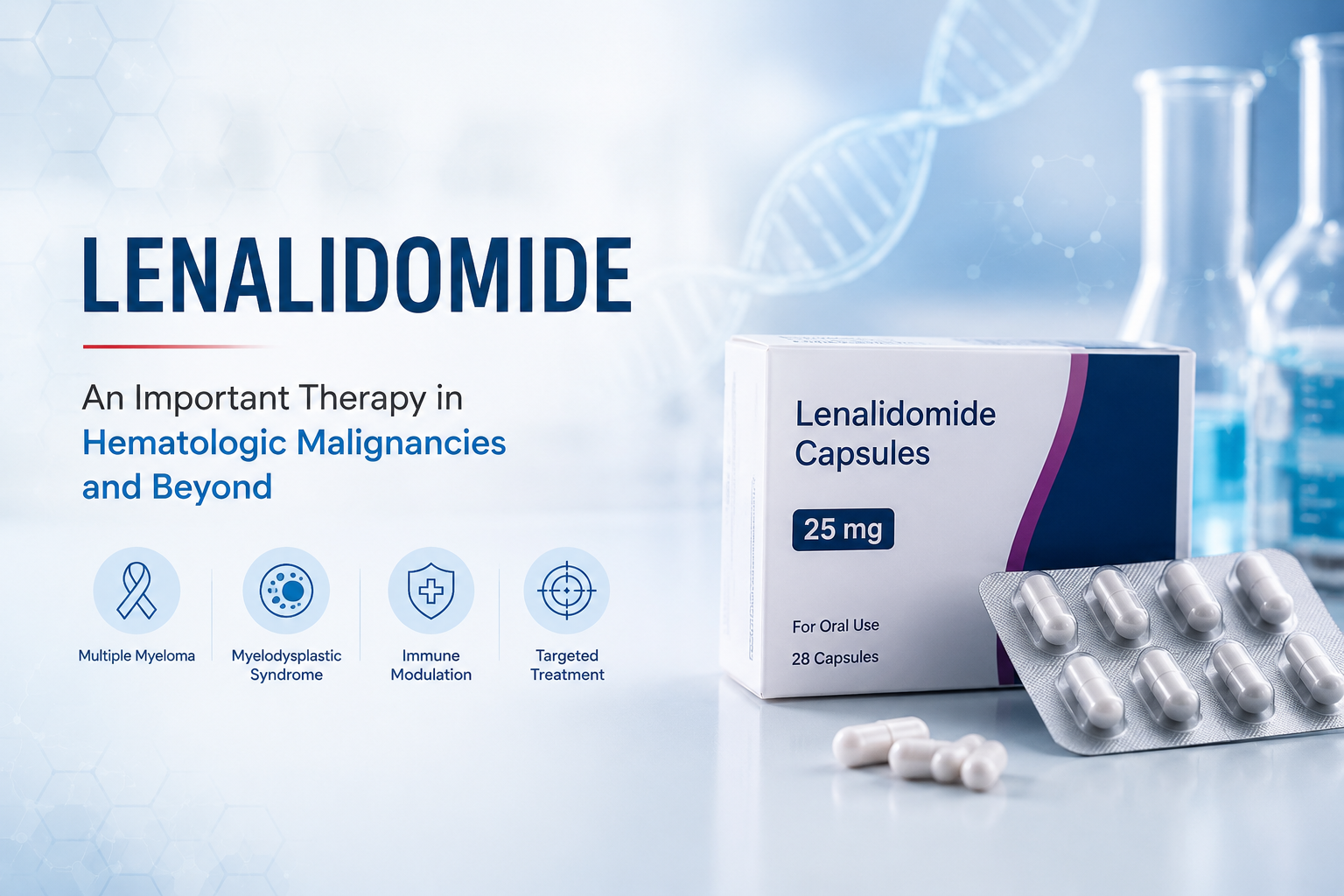


Lenalidomide is an oral targeted therapy categorized as an immunomodulatory drug (IMiD). It belongs to a specialized class of precision medicines used primarily in the management of multiple myeloma and specific subtypes of myelodysplastic syndromes (MDS) and lymphomas. Unlike traditional broad-spectrum chemotherapy, Lenalidomide works at the cellular level by harnessing the body's immune system while directly inhibiting cancer cell survival and blood vessel growth.
What is Lenalidomide Used For?
Lenalidomide is prescribed for adult patients diagnosed with specific hematologic (blood-related) malignancies. Its primary clinical indications include:
• Multiple Myeloma (MM): Approved both as a first-line treatment (in combination with dexamethasone or other agents) and as maintenance therapy following autologous stem cell transplantation (ASCT).
• Myelodysplastic Syndromes (MDS): Used in patients with transfusion-dependent anemia caused by low- or intermediate-1-risk MDS associated with a deletion 5q chromosomal abnormality.
• Mantle Cell Lymphoma (MCL): Approved for patients with relapsed or refractory mantle cell lymphoma whose disease has relapsed or progressed after prior therapies.
• Follicular & Marginal Zone Lymphoma: Used in combination with a rituximab product for adult patients with previously treated follicular lymphoma or marginal zone lymphoma.
How Does Lenalidomide Work?
In blood-related cancers, malignant cells evade immune destruction and rely on bone marrow microenvironments and new blood vessels to thrive.
Lenalidomide works through a multi-faceted mechanism of action:
• Cereblon (CRBN) Binding: It directly binds to cereblon, an enzyme component of the E3 ubiquitin ligase complex.
• Targeted Protein Degradation: Binding induces the selective degradation of essential B-cell transcription factors (IKZF1/Ikaros and IKZF3/Aiolos), leading to direct cytotoxicity and apoptosis (programmed cell death) in malignant B cells.
• Immune System Activation: It enhances T-cell and Natural Killer (NK) cell responsiveness, boosting the body’s own immune response to identify and eliminate tumor cells.
• Anti-Angiogenic Effect: It inhibits angiogenesis (the formation of new blood vessels), depriving tumors of the blood supply needed for growth.
Benefits of Lenalidomide
• Multi-Modal Anti-Cancer Action: Combines direct tumor cell killing, immune activation, and blood supply restriction.
• Proven Survival Outcomes: Significantly extends progression-free survival (PFS) and overall survival (OS) in multiple myeloma management.
• Convenient Oral Administration: Administered as an oral capsule, allowing patients to undergo long-term maintenance or active therapy at home.
Available Strengths
Lenalidomide is available in multiple hard capsule strengths to accommodate cyclic dosing schedules, weight-based adjustments, and renal function modifications:
• 2.5 mg capsules
• 5 mg capsules
• 10 mg capsules
• 15 mg capsules
• 20 mg capsules
• 25 mg capsules
Recommended Dosage & Administration
Lenalidomide is typically prescribed in repeating 28-day treatment cycles, often combined with steroids (like dexamethasone) or other oncology agents.
Standard Adult Starting Dosage Examples:
• Multiple Myeloma (Combination Therapy): 25 mg taken orally once daily on Days 1 through 21 of repeated 28-day cycles.
• Myelodysplastic Syndromes (del 5q MDS): 10 mg taken orally once daily on Days 1 through 21 (or continuously every day) of repeated 28-day cycles.
• Maintenance Post-Stem Cell Transplant: 10 mg taken orally once daily continuously for 28-day cycles.
Administration Rules:
• Timing: Take Lenalidomide at approximately the same time every day, with or without food.
• Swallowing: Swallow capsules whole with water. Do not open, break, crush, or handle the capsule contents.
• Renal Adjustments: Dosage reductions (e.g., 5 mg or 10 mg depending on clearance) are critical for patients with impaired kidney function.
Missed Dose
If a missed dose is remembered within less than 12 hours of the scheduled time, take it immediately. If more than 12 hours have passed since the missed dose, skip it entirely and take the next dose at your regular scheduled time. Do not take a double dose to make up for a missed capsule.
Common & Serious Side Effects
Because Lenalidomide impacts bone marrow function and vascular biology, careful monitoring is required throughout treatment:
• Hematologic Toxicity (Very Common): Neutropenia (low white blood cells), thrombocytopenia (low platelets), and anemia. Patients face an increased risk of infections and bleeding.
• Thromboembolic Events (Boxed Warning): Significantly increased risk of venous thromboembolism (deep vein thrombosis - DVT) and pulmonary embolism (PE), as well as arterial thrombosis (heart attack, stroke).
Anticoagulant or antiplatelet prophylaxis is routinely co-prescribed.
• Embryo-Fetal Toxicity (Boxed Warning): Severe, life-threatening birth defects or fetal death. Strict Risk Evaluation and Mitigation Strategies (REMS) program requirements apply globally.
• Gastrointestinal Symptoms: Diarrhea, constipation, nausea, vomiting, and abdominal discomfort.
• General Effects: Fatigue, muscle cramps, peripheral edema, rash, and fever.
• Second Primary Malignancies: A slightly increased risk of developing new secondary cancers has been observed in patients receiving long-term combination regimens.
Drug Interactions
• Digoxin: Co-administration with Lenalidomide can increase blood levels of digoxin; routine monitoring of plasma digoxin concentration is advised.
• Erythropoietin & Estrogens: Concomitant use with erythropoietin-stimulating agents, hormone replacement, or combined oral contraceptives further elevates the risk of serious blood clots (thrombosis).
• Cytotoxic Agents: Combining with other myelosuppressive agents increases the risk and severity of bone marrow suppression.
Pregnancy and Breastfeeding
• Black Box Warning - Embryo-Fetal Toxicity: Lenalidomide is a structural analog of thalidomide and causes severe, life-threatening birth defects. Females of reproductive potential must undergo mandatory pregnancy testing prior to starting treatment, weekly during the first month, and monthly thereafter. Two reliable forms of contraception must be used starting 4 weeks before treatment, during therapy, during dose interruptions, and for at least 4 weeks after stopping.
• Male Patients: Males must use latex or synthetic condoms during sexual contact with females of reproductive potential during treatment and for 4 weeks following the last dose, even if they have undergone a successful vasectomy.
• Breastfeeding: Breastfeeding is not recommended during Lenalidomide therapy due to potential severe adverse reactions in nursing infants.
Monitoring During Treatment
Standard clinical monitoring during Lenalidomide therapy includes:
• Complete Blood Count (CBC): Checked weekly during the first 8 weeks, then monthly thereafter to monitor for severe neutropenia and thrombocytopenia.
• Pregnancy Testing: Strict compliance with regulatory pregnancy testing protocols (REMS program).
• Renal Function: Regular monitoring of serum creatinine and blood urea nitrogen (BUN) to guide necessary dose adjustments.
• Vascular & Cardiac Assessment: Vigilance for signs of deep vein thrombosis (swelling, pain in legs) or pulmonary embolism (chest pain, shortness of breath).
Generic Lenalidomide
Generic versions of Lenalidomide are manufactured worldwide under strict international quality and bioequivalence standards:
• Cost-Effectiveness: Provides a drastically more affordable, budget-friendly alternative compared to the brand-name formulation (Revlimid).
• Therapeutic Equivalence: Contains the exact active pharmaceutical ingredient (API), delivering identical clinical efficacy, target binding, and safety outcomes.
• Global Access: Enhances accessibility for patients requiring continuous maintenance or combination regimens for hematologic malignancies.
Frequently Asked Questions (FAQs)
Is Lenalidomide considered traditional chemotherapy?
No. Lenalidomide is an immunomodulatory targeted drug (IMiD). It alters specific intracellular targets and enhances the immune response rather than acting purely as a cytotoxic chemical agent.
Why do I need to take blood thinners with Lenalidomide?
Lenalidomide increases the risk of serious blood clots (DVT/PE). Doctors routinely prescribe preventative blood thinners (such as low-dose aspirin, warfarin, or low-molecular-weight heparin) based on individual risk factors.
Can Lenalidomide capsules be opened if I have trouble swallowing?
No. Lenalidomide capsules must be swallowed whole. Opening, crushing, or breaking the capsules exposes individuals to the powder inside, which carries severe health and handling risks.
Important Safety Information
This article is intended for educational purposes only and does not substitute for expert medical advice. Always consult a qualified hematologist, oncologist, or healthcare professional before starting, adjusting, or discontinuing Lenalidomide treatment.
References
• U.S. Food and Drug Administration (FDA) Prescribing Information (Revlimid)
• European Medicines Agency (EMA) Drug Information Portal
• National Comprehensive Cancer Network (NCCN) Guidelines in Oncology - Multiple Myeloma
• American Society of Hematology (ASH) Clinical Practice Resources
Contact Us
Are you searching for Generic Lenalidomide, wholesale pricing structures, global availability, or export documentation?
Our expert team is fully equipped to guide you through trusted manufacturer selections, product availability, international licensing, and country-specific import regulations. Contact us today to learn more.
What is Lenalidomide?
Lenalidomide is an oral targeted therapy categorized as an immunomodulatory drug (IMiD). It belongs to a specialized class of precision medicines used primarily in the ma…