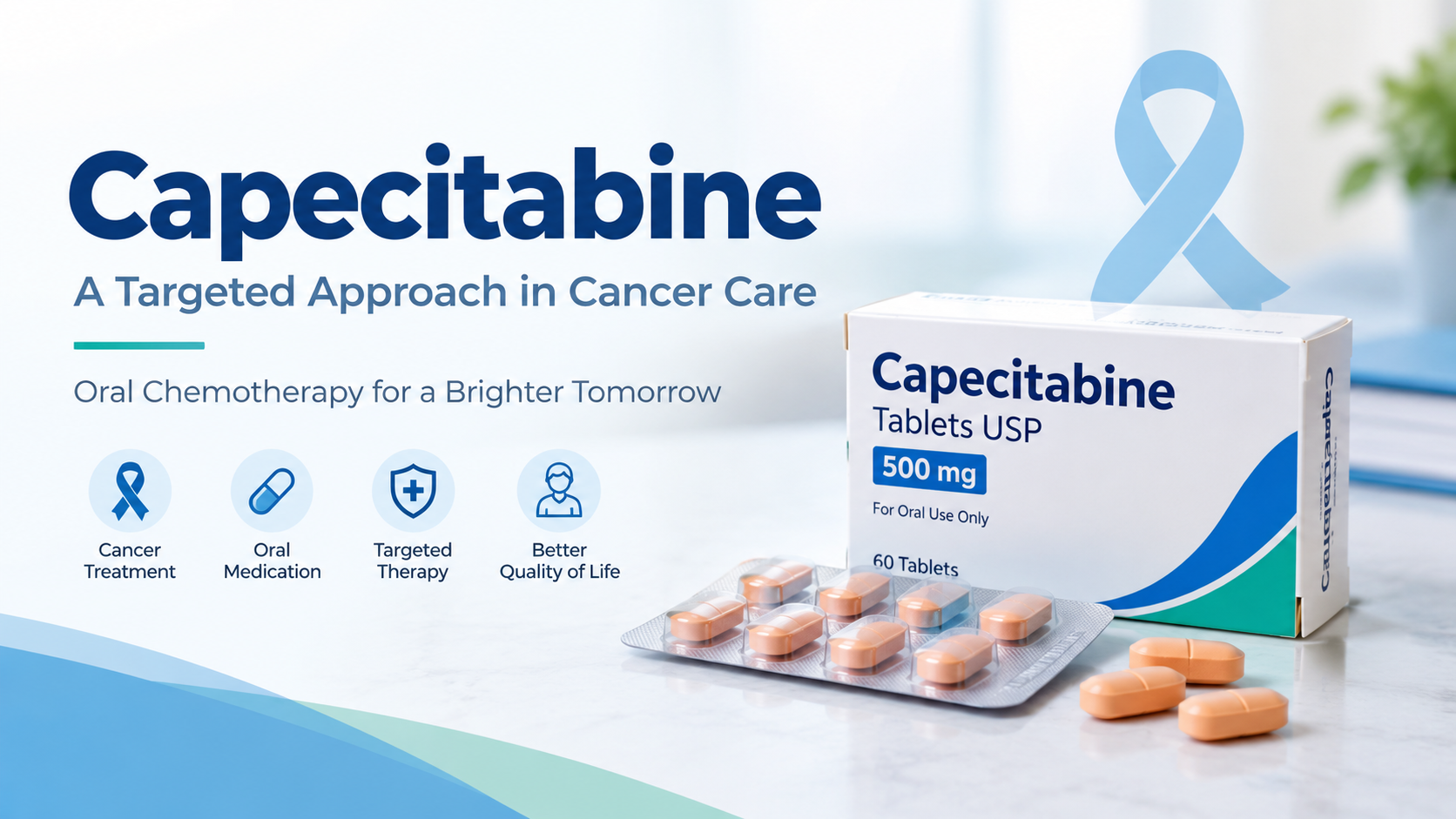


Capecitabine is an oral anticancer medicine classified as a fluoropyrimidine antimetabolite. It is a prodrug of 5-fluorouracil (5-FU), meaning the body converts Capecitabine into 5-FU, which interferes with DNA and RNA synthesis in rapidly dividing cancer cells.
It is commonly used in the treatment of several types of cancer, particularly colorectal, breast, and gastrointestinal cancers.
What is Capecitabine Used For?
Capecitabine is prescribed for patients with specific solid tumors. Its major clinical indications include:
• Colorectal Cancer: Used for metastatic colorectal cancer and, in appropriate patients, as adjuvant treatment of colon cancer.
• Breast Cancer: Used for metastatic breast cancer, including patients whose disease has progressed following certain chemotherapy regimens.
• Gastric and Gastroesophageal Cancer: May be used in combination with platinum-based chemotherapy for advanced or metastatic gastric or gastroesophageal junction cancer.
• Other Gastrointestinal Cancers: Capecitabine may also be incorporated into treatment regimens for other gastrointestinal malignancies according to clinical guidelines and physician assessment.
How Does Capecitabine Work?
Capecitabine works through conversion into the active chemotherapy agent 5-fluorouracil (5-FU):
• Prodrug Conversion: After oral administration, Capecitabine is metabolized through several enzymatic steps to form 5-FU.
• Thymidylate Synthase Inhibition: 5-FU interferes with thymidylate synthase, an enzyme required for DNA synthesis.
• RNA Interference: Its metabolites can also interfere with RNA processing and protein synthesis.
• Cancer Cell Growth Suppression: These effects inhibit the growth and survival of rapidly dividing cancer cells.
Benefits of Capecitabine
• Oral Chemotherapy: Available as tablets, providing an alternative to some intravenous fluoropyrimidine regimens.
• Targeted Activation: Capecitabine is converted to 5-FU through metabolic pathways, with an important final conversion step occurring preferentially in tumor tissue.
• Broad Clinical Use: Established treatment option for colorectal, breast, and gastrointestinal cancers.
• Combination Therapy: Can be combined with other anticancer medicines depending on the cancer type and treatment protocol.
Available Strengths
Capecitabine is commonly available as oral tablets in:
• 150 mg tablets
• 500 mg tablets
Different strengths may be combined to achieve the prescribed dose.
Recommended Dosage & Administration
Capecitabine dosing depends on the cancer type, treatment regimen, body surface area, kidney function, and whether it is being used alone or with other anticancer medicines.
Standard Adult Dosing
• Metastatic Colorectal or Breast Cancer: A commonly used monotherapy regimen is 1,250 mg/m² orally twice daily for 14 days, followed by a 7-day rest period, constituting a 21-day treatment cycle.
• Combination Therapy: When used with other chemotherapy medicines, lower or different doses may be prescribed according to the specific treatment protocol.
• Adjuvant Colon Cancer: Dosing and treatment duration are determined by the oncology treatment protocol.
Administration Rules
• Food: Take Capecitabine with food or within 30 minutes after a meal.
• Frequency: Usually taken twice daily, approximately 12 hours apart.
• Swallowing: Tablets should be swallowed whole with water. They should generally not be crushed or chewed.
• Dose Modification: Dose reductions or treatment interruption may be necessary for toxicity or kidney impairment.
Missed Dose
If a dose is missed, do not take the missed dose later and do not double the next dose. Continue with the next scheduled dose and inform the treating healthcare professional if repeated doses are missed.
Common & Serious Side Effects
Capecitabine can cause side effects, particularly because it affects rapidly dividing cells.
Common adverse effects include:
• Hand-Foot Syndrome: Redness, swelling, pain, tingling, or peeling of the palms and soles.
• Diarrhea: Can range from mild to severe and may require treatment interruption.
• Nausea and Vomiting
• Fatigue and Weakness
• Loss of Appetite
• Abdominal Discomfort
• Mouth Sores/Mucositis
• Changes in Blood Counts
Serious adverse effects may include:
• Severe diarrhea or dehydration
• Severe hand-foot syndrome
• Significant bone marrow suppression
• Severe skin reactions
• Liver toxicity
• Cardiotoxicity, including chest pain or other cardiac events
• Rare but serious dihydropyrimidine dehydrogenase (DPD) deficiency-related toxicity
DPD Deficiency and Capecitabine
Capecitabine is metabolized through pathways involving dihydropyrimidine dehydrogenase (DPD). Patients with complete or certain forms of partial DPD deficiency may have a significantly increased risk of severe or life-threatening toxicity.
Where recommended by local guidelines and product labeling, DPYD/DPD testing may be performed before treatment to help identify patients at increased risk.
Drug Interactions
Capecitabine can interact with several medicines.
Important interactions include:
• Warfarin: Capecitabine may increase the anticoagulant effect of warfarin and significantly increase bleeding risk. Close INR monitoring is required.
• Phenytoin: Capecitabine may increase phenytoin concentrations, requiring monitoring.
• Leucovorin/Folinic Acid: May increase the toxicity of fluoropyrimidine therapy.
• Other Myelosuppressive Medicines: Concurrent treatment may increase bone marrow suppression.
• Patients should inform their healthcare provider about all prescription medicines, supplements, and herbal products they are taking.
Pregnancy and Breastfeeding
Capecitabine can cause fetal harm.
• Pregnancy: Capecitabine should not be used during pregnancy unless specifically determined necessary by the treating physician. Effective contraception is recommended for patients who can become pregnant.
• Breastfeeding: Breastfeeding is generally not recommended during Capecitabine treatment and for an appropriate period after the final dose, as determined by the treating physician.
Monitoring During Treatment
Patients receiving Capecitabine require regular oncology follow-up and laboratory monitoring.
Important monitoring may include:
• Complete Blood Count (CBC): To monitor for anemia, neutropenia, and other blood-count abnormalities.
• Kidney Function: Renal function should be assessed before and during treatment when clinically appropriate.
• Liver Function: Liver enzymes and bilirubin may be monitored.
• Hand-Foot Syndrome: Regular assessment for skin toxicity.
• Gastrointestinal Toxicity: Monitoring for diarrhea, vomiting, dehydration, and mucositis.
• Cardiac Symptoms: Patients should report chest pain, shortness of breath, or other concerning cardiovascular symptoms promptly.
Generic Capecitabine
Generic Capecitabine contains capecitabine as the active pharmaceutical ingredient and is available as an alternative to branded products such as Xeloda in markets where approved.
Key advantages include:
• Cost-Effectiveness: Generic formulations may provide a more affordable alternative to branded Capecitabine.
• Same Active Ingredient: Approved generic products contain the same active pharmaceutical ingredient as the reference medicine.
• Therapeutic Equivalence: Authorized generic products must meet applicable quality and bioequivalence requirements.
• Global Availability: Generic Capecitabine may be available from appropriately licensed manufacturers in different pharmaceutical markets.
Frequently Asked Questions (FAQs)
Is Capecitabine a chemotherapy drug?
Yes. Capecitabine is an oral chemotherapy medicine belonging to the fluoropyrimidine class. It is converted in the body into 5-fluorouracil (5-FU).
What cancers are treated with Capecitabine?
Capecitabine is primarily used for colorectal cancer, breast cancer, and certain gastrointestinal cancers, depending on the specific treatment protocol.
How should Capecitabine be taken?
Capecitabine is usually taken twice daily with food or within 30 minutes after eating, according to the prescribed treatment regimen.
What is hand-foot syndrome?
Hand-foot syndrome is a common Capecitabine-related reaction characterized by redness, swelling, tenderness, tingling, or peeling of the palms and soles.
Does Capecitabine cause hair loss?
Hair loss can occur, but it is generally less pronounced than with some traditional chemotherapy regimens. The likelihood depends on the overall treatment regimen and whether Capecitabine is combined with other anticancer medicines.
Important Safety Information
Capecitabine is a prescription anticancer medicine that should be prescribed and monitored by a qualified oncologist or healthcare professional experienced in cancer treatment.
Treatment should be individualized according to cancer type, body surface area, kidney function, previous treatment, concurrent medicines, and treatment-related toxicity.
This article is intended for educational and informational purposes only and does not replace professional medical advice. Patients should not start, stop, or modify Capecitabine treatment without consulting their treating healthcare provider.
References
• U.S. Food and Drug Administration (FDA) – Capecitabine Prescribing Information
• National Cancer Institute (NCI) – Cancer Treatment Information
• European Medicines Agency (EMA) – Capecitabine Product Information
• National Comprehensive Cancer Network (NCCN) – Cancer Treatment Guidelines
Contact Us
Are you searching for Generic Capecitabine, wholesale pricing structures, global availability, manufacturer information, or export documentation?
Our expert team can assist with Generic Capecitabine 150 mg and 500 mg product availability, manufacturer selection, pharmaceutical documentation, wholesale requirements, and country-specific import considerations.
Contact us today to learn more about available products.
What is Capecitabine?
Capecitabine is an oral anticancer medicine classified as a fluoropyrimidine antimetabolite. It is a prodrug of 5-fluorouracil (5-FU), meaning the body converts Capecitab…