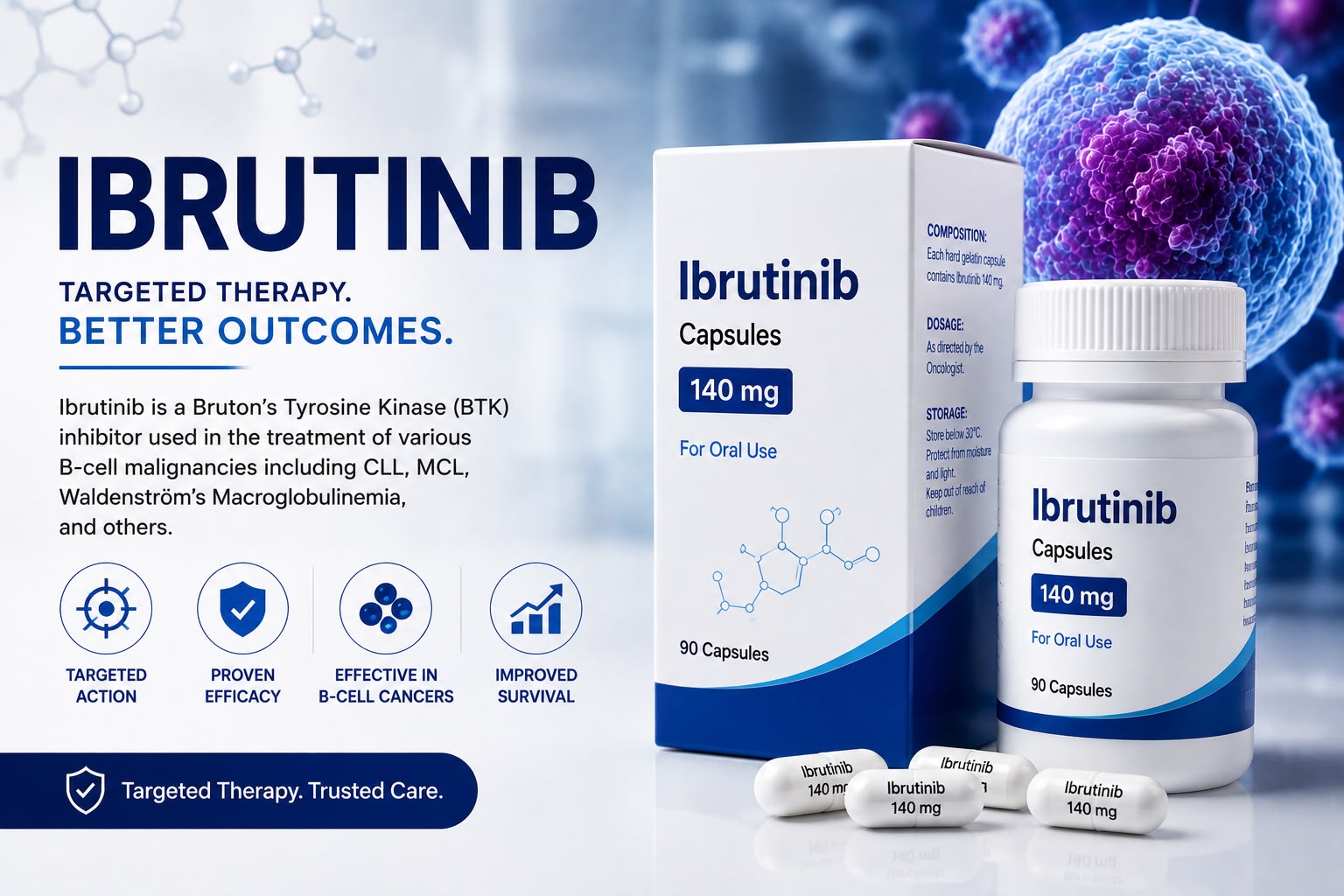


Ibrutinib is a targeted therapy categorized as a selective BTK (Bruton's tyrosine kinase) inhibitor. It is a first-in-class precision medicine used for treating specific types of B-cell malignancies (blood cancers) and certain immune-related conditions. By targeting the specific biological pathways driving abnormal cell growth, it disrupts the survival signals of cancer cells, slowing down tumor progression and offering an effective alternative or addition to traditional chemotherapy.
What is Ibrutinib Used For?
Ibrutinib is indicated for adults diagnosed with various B-cell lymphomas and specialized conditions. It is widely used in several clinical settings, including:
• Chronic Lymphocytic Leukemia (CLL) / Small Lymphocytic Lymphoma (SLL): Used as a highly effective first-line or subsequent therapy, including for high-risk patients with 17p deletion.
• Waldenström’s Macroglobulinemia (WM): Approved as a primary treatment option for this rare type of non-Hodgkin lymphoma.
• Mantle Cell Lymphoma (MCL): Indicated for patients whose cancer has progressed after receiving at least one prior therapy.
• Marginal Zone Lymphoma (MZL): Used for patients who require systemic therapy and have previously received an anti-CD20-based regimen.
• Chronic Graft-versus-Host Disease (cGVHD): Approved for adult and pediatric patients (age 1 and older) after the failure of one or more lines of systemic therapy.
How Does Ibrutinib Work?
In many B-cell cancers, the Bruton's tyrosine kinase (BTK) protein is overactivated. This protein sends continuous signals that instruct cancerous B-cells to multiply, survive, and spread.
Ibrutinib works by forming a strong, irreversible bond with the BTK protein. This action:
• Blocks Survival Signaling: It cuts off the downstream signals required for malignant B-cells to grow and proliferate.
• Inhibits Cell Adhesion and Migration: It disrupts the cancer cells' ability to anchor themselves in the lymph nodes and bone marrow, forcing them into the bloodstream where they naturally die off.
• Targets Precisely: Unlike conventional chemotherapy that destroys all rapidly dividing cells indiscriminately, Ibrutinib specifically targets the BTK pathway to spare more healthy cells.
Benefits of Ibrutinib
Clinical applications and trials have demonstrated substantial advantages for patients on Ibrutinib:
• Outstanding Efficacy: Significantly delays disease progression and improves progression-free survival across various blood cancers.
• Convenient Oral Dosing: Administered once daily in capsule or tablet form, allowing patients to manage their treatment at home without frequent clinic infusions.
• Chemotherapy-Free Option: Provides a highly effective targeted profile, avoiding many classic side effects of traditional cytotoxic chemotherapy.
Available Strengths
Ibrutinib is commonly available in the following oral strengths to accommodate various indications and dose adjustments:
• 70 mg capsules/tablets
• 140 mg capsules/tablets
• 280 mg tablets
• 420 mg tablets
• 560 mg tablets
Recommended Dosage & Administration
Unlike some cyclical targeted therapies, Ibrutinib is typically taken continuously every day without an "off-treatment" week, until disease progression or unacceptable toxicity occurs. The standard adult daily dosages vary by condition:
• CLL/SLL and Waldenström’s: 420 mg orally once daily.
• Mantle Cell and Marginal Zone Lymphoma: 560 mg orally once daily.
• Chronic GVHD: 420 mg orally once daily.
Administration Rules: Ibrutinib should be taken at approximately the same time each day. Swallow the capsules/tablets whole with a glass of water. Do not open, break, or chew them. It can be taken with or without food.
Missed Dose
If a dose of Ibrutinib is missed:
• Take it as soon as possible on the same day if remembered.
• Skip the missed dose entirely if it is almost time for the next day's dose. Do not take an extra dose to make up for a missed one.
• If vomiting occurs after taking the drug, do not take an additional dose. Simply take the next scheduled dose the following day.
Common & Serious Side Effects
While Ibrutinib has a targeted profile, patients should be monitored for a distinct set of potential side effects:
• Hemorrhage & Bruising: Increased risk of bleeding (e.g., nosebleeds, bruising, or rarely, major internal bleeding).
• Diarrhea: One of the most common early side effects, usually manageable with hydration or anti-diarrheal medication.
• Cardiac Arrhythmias: Can cause heart rhythm issues like atrial fibrillation or flutter, presenting as heart palpitations, dizziness, or shortness of breath.
• Hypertension: New or worsening high blood pressure.
• Cytopenias: Lowered white blood cells (neutropenia), red blood cells (anemia), and platelets (thrombocytopenia), increasing infection and bruising risks.
• Fatigue & Musculoskeletal Pain: Generalized tiredness and aches in muscles or bones.
• Rash and Nail Disorders: Dry skin, minor rashes, or brittle nails.
Drug Interactions
Ibrutinib is primarily metabolized by the liver enzyme CYP3A. Certain substances can dangerously alter its levels:
• Strong CYP3A Inhibitors: (e.g., ketoconazole, clarithromycin, grapefruit juice, Seville oranges)—these can drastically increase Ibrutinib levels, raising the risk of toxicity.
• Strong CYP3A Inducers: (e.g., rifampin, phenytoin, St. John’s Wort)—these can lower drug levels, making the treatment less effective.
• Blood Thinners: Concomitant use with anticoagulants (like warfarin) or antiplatelet drugs increases bleeding risks and requires cautious monitoring.
Pregnancy and Breastfeeding
• Embryo-Fetal Toxicity: Ibrutinib can cause severe fetal harm. Highly effective contraception must be utilized by females of reproductive potential during treatment and for a specified timeframe after the final dose.
• Breastfeeding: To avoid potential adverse reactions in nursing infants, breastfeeding should be discontinued during Ibrutinib therapy.
Monitoring During Treatment
Your oncology team will mandate regular checks to ensure safety:
• Complete Blood Counts (CBC): Monitored monthly to check for cytopenias.
• Blood Pressure & Heart Check: Regular monitoring for signs of hypertension or irregular heartbeats.
• Renal & Hepatic Function: Periodic blood tests to evaluate kidney (creatinine) and liver function, adjusting doses if any impairment arises.
• Surgery Planning: Ibrutinib may need to be temporarily paused 3 to 7 days before and after any planned medical or dental surgery due to bleeding risks.
Generic Ibrutinib
Generic versions of Ibrutinib are manufactured globally under rigorous bioequivalence standards:
• Cost-Effectiveness: Offers a drastically more affordable option compared to the original brand-name drug (Imbruvica).
• Therapeutic Equivalence: Contains the exact same active pharmaceutical ingredient, delivering identical clinical efficacy, safety profiles, and mechanisms.
• Global Access: Expands international availability, ensuring patients worldwide can access life-prolonging targeted blood cancer therapies.
Frequently Asked Questions (FAQs)
Is Ibrutinib a form of traditional chemotherapy?
No. Ibrutinib is a targeted kinase inhibitor. It specifically blocks the BTK protein inside abnormal B-cells, meaning it works differently and has a distinct side-effect profile compared to conventional chemo.
Do I take Ibrutinib in cycles like other cancer drugs?
No. Unlike therapies that require rest weeks, Ibrutinib is typically taken continuously every single day as long as it successfully controls the cancer and does not cause severe side effects.
Should I avoid any specific foods while taking Ibrutinib?
Yes. You must strictly avoid grapefruit, grapefruit juice, and Seville oranges during your treatment. These foods naturally inhibit the enzymes that break down Ibrutinib, which can lead to dangerously high levels of the medication in your body.
Important Safety Information
This article is intended for educational purposes only and does not substitute for expert medical advice. Always consult a qualified oncologist or hematologist before initiating, adjusting, or stopping Ibrutinib therapy.
References
• U.S. Food and Drug Administration (FDA) Prescribing Information
• National Comprehensive Cancer Network (NCCN) Guidelines
• European Medicines Agency (EMA) Drug Information
• American Society of Clinical Oncology (ASCO)
Contact Us
Are you searching for Generic Ibrutinib, wholesale pricing structures, global availability, or export documentation?
Our team is equipped to guide you through manufacturer selections, product availability, international licensing, and country-specific import regulations. Contact us today to learn more.
What is Ibrutinib?
Ibrutinib is a targeted therapy categorized as a selective BTK (Bruton's tyrosine kinase) inhibitor. It is a first-in-class precision medicine used for treating specific…