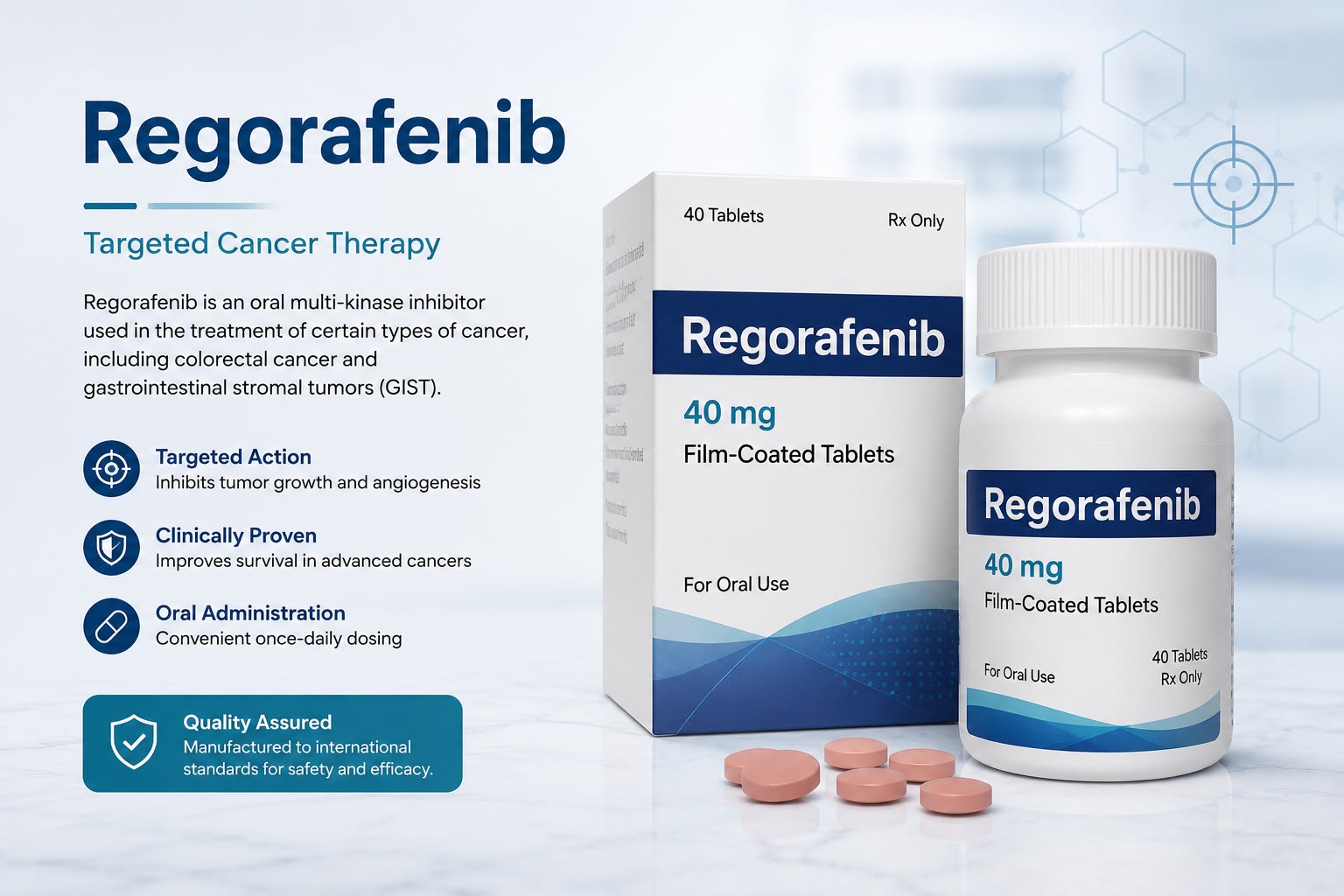


Regorafenib is a targeted cancer therapy categorized as an oral multikinase inhibitor (a type of tyrosine kinase inhibitor, or TKI). It belongs to a modern class of precision medicines used primarily in the management of specific types of advanced or refractory solid tumors. Unlike traditional cytotoxic treatments, Regorafenib works at the molecular level to block multiple enzymatic pathways that drive cancer cell growth, vessel formation, and tumor survival.
What is Regorafenib Used For?
Regorafenib is prescribed for adult patients diagnosed with specific advanced or metastatic cancers that have progressed following standard therapies. Its primary clinical indications include:
• Metastatic Colorectal Cancer (mCRC): Approved for patients previously treated with fluoropyrimidine-, oxaliplatin-, and irinotecan-based chemotherapy, anti-VEGF therapy, and, if RAS wild-type, an anti-EGFR therapy.
• Advanced Gastrointestinal Stromal Tumors (GIST): Used for patients with locally advanced, unresectable, or metastatic GIST who have had disease progression on or intolerance to imatinib mesylate and sunitinib malate.
• Hepatocellular Carcinoma (HCC): Approved as a second-line targeted treatment option for patients with liver cancer who have been previously treated with sorafenib.
How Does Regorafenib Work?
In solid tumors, signaling proteins known as receptor tyrosine kinases (RTKs) are overactive, sending constant "growth, survival, and blood vessel supply" signals to tumor cells.
Regorafenib operates through a distinct multi-targeted molecular mechanism:
• Multikinase Inhibition: Regorafenib targets a broad spectrum of receptor tyrosine kinases, including those involved in tumor angiogenesis (VEGFR1–3, TIE2), tumor microenvironment stroma (PDGFR-β, FGFR1), and direct oncogenesis (KIT, RET, RAF-1, BRAF).
• Cuts Off Tumor Blood Supply: By inhibiting angiogenic receptors like VEGFR and TIE2, it deprives the tumor of the new blood vessels needed to sustain growth.
• Precision Action: It specifically targets key kinase pathways driving tumor progression, helping to slow disease progression even in tumors resistant to earlier therapies.
Benefits of Regorafenib
• Proven Survival Benefit: Extends overall survival (OS) and progression-free survival (PFS) in patients with refractory metastatic colorectal cancer, GIST, and liver cancer.
• Convenient Oral Administration: Administered as a once-daily tablet taken at home, eliminating the need for frequent intravenous hospital infusions.
• Broad Pathway Blockade: Its ability to simultaneously inhibit angiogenic, stromal, and oncogenic pathways helps combat complex tumor resistance mechanisms.
Available Strengths
Regorafenib is produced in a standard oral film-coated tablet strength to facilitate clinical dosing schedules, dose titrations, and side-effect management:
• 40 mg film-coated tablets
Recommended Dosage & Administration
Regorafenib is administered in cyclic schedules (3 weeks on treatment, followed by 1 week off) to allow normal tissues time to recover.
• Standard Starting Adult Dosage: 160 mg (four 40 mg tablets) taken orally once daily for 21 consecutive days of each 28-day cycle. (Note: Some oncologists may use a dose-escalation strategy starting at 80 mg daily during the first cycle based on patient tolerance).
• Administration Rules:
Take Regorafenib with a low-fat meal: Food matters—take the tablets with a light meal containing less than 30% fat and fewer than 600 calories (e.g., cereal with low-fat milk or toast with jam). Avoid high-fat meals.
Swallow tablets whole with water. Do not crush, break, or chew them.
Take the tablet at the same time each day during the 3-week treatment period.
Missed Dose
• If a dose is missed on a given day, take it on the same day as soon as remembered.
• If you do not remember until the following day, skip the missed dose and resume your normal daily schedule. Do not take two doses on the same day to make up for a missed dose.
Common & Serious Side Effects
While Regorafenib is a targeted therapy, blocking kinase pathways can cause specific adverse reactions that require active management:
• Hand-Foot Skin Reaction (HFSR / Palmar-Plantar Erythrodysesthesia): Very common; causes redness, swelling, blisters, or pain on the palms of the hands and soles of the feet.
• Gastrointestinal Issues: Diarrhea, nausea, loss of appetite, weight loss, and stomatitis/mucosal inflammation (mouth sores) are common.
• Hypertension (High Blood Pressure): Frequent elevation of blood pressure, especially during the first cycle of treatment.
• Fatigue & Weakness: Asthenia or feeling unusually tired is commonly reported.
• Severe Hepatotoxicity (Boxed Warning): Risk of severe and potentially fatal drug-induced liver injury. Requires routine liver function monitoring.
• Hemorrhage (Bleeding): Increased risk of mild-to-severe bleeding in the gastrointestinal or respiratory tracts.
• Gastrointestinal Perforation & Wound Healing Issues: Rare cases of stomach or intestinal wall tears, or delayed healing of surgical wounds.
Drug Interactions
Regorafenib is primarily metabolized by liver enzymes (CYP3A4) and glucuronidation (UGT1A9). Certain medications can significantly alter its performance:
• Strong CYP3A4 Inhibitors: (e.g., ketoconazole, clarithromycin, itraconazole, grapefruit juice) can increase Regorafenib concentrations in the body, heightening toxicity risks.
• Strong CYP3A4 Inducers: (e.g., rifampin, carbamazepine, St. John’s Wort, phenytoin) can lower Regorafenib exposure, reducing its anticancer efficacy.
• BCRP Substrates: Regorafenib may increase exposure to Breast Cancer Resistance Protein substrates (e.g., methotrexate, fluvastatin, atorvastatin).
• Anticoagulants: Concomitant use with blood thinners like warfarin requires careful monitoring due to bleeding risks.
Pregnancy and Breastfeeding
• Embryo-Fetal Toxicity: Regorafenib can cause severe harm or death to an unborn baby. Females of reproductive potential (and males with female partners of reproductive potential) must use effective contraception during treatment and for at least 2 months (8 weeks) after the final dose.
• Breastfeeding: Breastfeeding is not recommended during treatment and for at least 2 weeks following the last dose due to potential risks to nursing infants.
Monitoring During Treatment
To maintain safety and handle side effects effectively, medical teams routinely conduct:
• Liver Function Tests (LFTs): Blood tests (ALT, AST, bilirubin) prior to starting, every 2 weeks during the first 2 months, and monthly thereafter.
• Blood Pressure Monitoring: Weekly blood pressure checks during the first 6 weeks of therapy and regularly throughout treatment.
• Dermatologic Evaluation: Early intervention for hand-foot skin reactions (using keratolytics, moisturizers, or temporary dose reductions).
• Complete Blood Counts & Coagulation: Tracking for anemia, low platelets, or potential bleeding complications.
Generic Regorafenib
Generic versions of Regorafenib are manufactured globally under international pharmaceutical compliance standards:
• Cost-Effectiveness: Provides a significantly more affordable, budget-friendly alternative compared to brand-name formulations (such as Stivarga).
• Therapeutic Equivalence: Contains the identical active pharmaceutical ingredient (API), maintaining the exact same clinical safety profile, mechanism, and treatment outcome.
• Global Access: Improves worldwide availability for patients requiring advanced multikinase targeted precision oncology therapies.
Frequently Asked Questions (FAQs)
Is Regorafenib considered traditional chemotherapy?
No. Regorafenib is an oral targeted multikinase inhibitor (TKI). Instead of killing all fast-dividing cells indiscriminately like traditional chemotherapy, it targets specific proteins and receptors (such as VEGFR, KIT, and RAF) driving tumor growth and blood vessel formation.
Should I take Regorafenib on an empty stomach or with food?
Regorafenib should be taken with a low-fat meal (containing less than 30% fat and under 600 calories). Taking it after a low-fat meal ensures proper absorption into your bloodstream compared to taking it on a completely empty stomach or after a high-fat meal.
What should I do if I develop hand-foot skin reaction (HFSR) while taking Regorafenib?
Hand-foot skin reaction (redness, tenderness, or peeling on hands and feet) is a common side effect. Inform your healthcare team immediately at the first sign of discomfort. They may recommend thick moisturizing creams, urea-based ointments, cushioned footwear, or a temporary dose adjustment.
Important Safety Information
This article is intended for educational purposes only and does not substitute for expert medical advice. Always consult a qualified oncologist or healthcare professional before initiating, adjusting, or stopping Regorafenib therapy.
References
• U.S. Food and Drug Administration (FDA) Prescribing Information (Stivarga)
• National Comprehensive Cancer Network (NCCN) Clinical Practice Guidelines in Oncology
• European Medicines Agency (EMA) Drug Information Portal
• American Society of Clinical Oncology (ASCO)
Contact Us
Are you searching for Generic Regorafenib, wholesale pricing structures, global availability, or export documentation?
Our expert team is fully equipped to guide you through trusted manufacturer selections, product availability, international licensing, and country-specific import regulations. Contact us today to learn more.
What is Regorafenib?
Regorafenib is a targeted cancer therapy categorized as an oral multikinase inhibitor (a type of tyrosine kinase inhibitor, or TKI). It belongs to a modern class of preci…