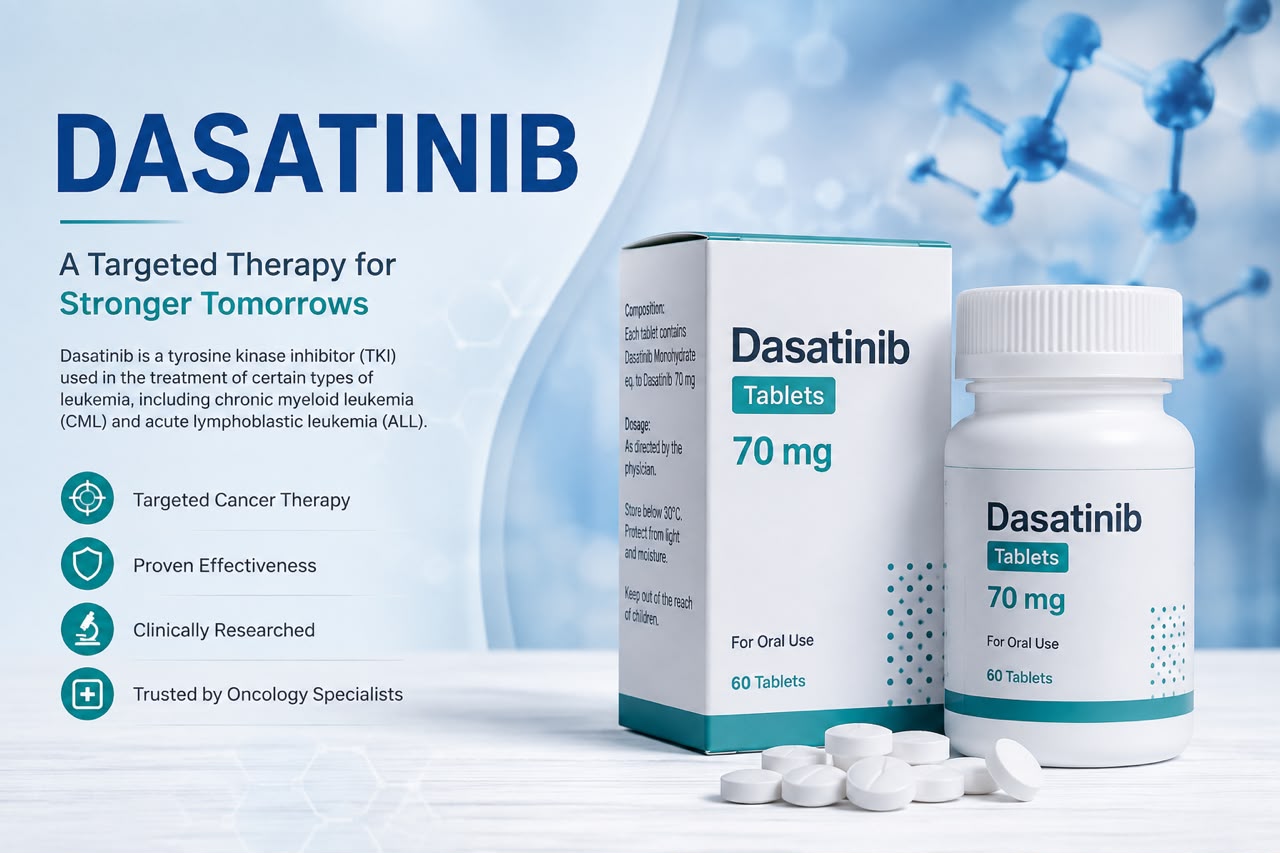


Dasatinib is an advanced targeted oral antineoplastic medication categorized as a second-generation multi-targeted tyrosine kinase inhibitor (TKI). It belongs to a modern class of precision targeted therapies used primarily in the management of specific hematologic malignancies (blood cancers).
Engineered to overcome resistance to older first-generation TKIs (such as imatinib), Dasatinib acts as a potent inhibitor of abnormal signaling proteins that drive the uncontrolled proliferation of leukemic cells, helping restore normal blood cell production with targeted cellular precision.
What is Dasatinib Used For?
Dasatinib is prescribed for adult and pediatric patients (meeting specific age and body weight criteria) for the treatment of targeted forms of leukemia. Its primary clinical indications include:
• Philadelphia Chromosome-Positive Chronic Myelogenous Leukemia (Ph+ CML):
o Newly diagnosed adults with chronic phase Ph+ CML.
o Adults with chronic, accelerated, or blast phase Ph+ CML who are resistant or intolerant to prior therapy, including imatinib.
o Pediatric patients (1 year of age and older) with chronic phase Ph+ CML.
• Philadelphia Chromosome-Positive Acute Lymphoblastic Leukemia (Ph+ ALL):
o Adults and pediatric patients (1 year of age and older) with Ph+ ALL who are resistant or intolerant to prior therapy.
o Pediatric patients with newly diagnosed Ph+ ALL in combination with chemotherapy.
How Does Dasatinib Work?
In Ph+ leukemias, a genetic abnormality creates an abnormal enzyme called the BCR-ABL fusion protein, which signals white blood cells to divide uncontrollably. Dasatinib operates through a potent molecular mechanism:
• Inhibition of BCR-ABL Kinase: Dasatinib binds directly to the active and inactive conformations of the BCR-ABL kinase enzyme, blocking its ATP-binding site and halting downstream cell survival signals.
• Multi-Kinase Target Profile: Beyond BCR-ABL, Dasatinib inhibits additional key oncogenic kinase families, including SRC family kinases (SRC, LCK, YES, FYN), c-KIT, EPHA2, and PDGFR-$\beta$.
• Induction of Apoptosis: By blocking these multiple oncogenic pathways simultaneously, Dasatinib halts malignant cell division and triggers programmed cell death (apoptosis) in leukemic cell populations.
Benefits of Dasatinib
• High Potency Against Resistance: Significantly more potent in vitro than first-generation TKIs, effectively targeting most imatinib-resistant BCR-ABL mutations (with the exception of T315I).
• Rapid Cytogenetic & Molecular Responses: Achieves deep and durable molecular responses in a large proportion of patients with CML and Ph+ ALL.
• Convenient Daily Oral Administration: Formulated as a once-daily oral tablet, enabling long-term outpatient management without requiring intravenous infusions.
Available Strengths
Dasatinib is manufactured as oral film-coated tablets in a wide range of precise strengths to allow customized dosing and adjustment:
• 20 mg film-coated tablets
• 50 mg film-coated tablets
• 70 mg film-coated tablets
• 80 mg film-coated tablets
• 100 mg film-coated tablets
• 140 mg film-coated tablets
Recommended Dosage & Administration
Dosing schedules are tailored according to the leukemia phase, patient age, weight, and treatment history.
Standard Adult Dosage Guidelines
• Chronic Phase CML: The standard recommended dose is 100 mg orally once daily.
• Accelerated or Blast Phase CML & Ph+ ALL: The standard recommended dose is 140 mg orally once daily.
Administration Rules
• With or Without Food: Dasatinib can be taken either with or without a meal.
• Swallow Whole: Tablets must be swallowed whole with water. Do not crush, split, chew, or dissolve the tablets.
• Consistency is Key: Take your daily dose at approximately the same time every day to maintain stable drug levels in the blood.
Missed Dose
• If a dose is missed, skip the missed dose and take the next scheduled dose at your regular time the following day. Do not take two doses at once to make up for a missed dose.
Common & Serious Side Effects
While Dasatinib is generally well-tolerated, specific adverse effects require clinical oversight and routine monitoring:
• Fluid Retention & Pleural Effusion: Swelling around the eyes, ankles, or legs. Fluid accumulation around the lungs (pleural effusion) or heart (pericardial effusion) can cause dry cough, chest pain, and shortness of breath.
• Myelosuppression: Significant temporary drops in blood cell counts leading to neutropenia (fever/infection risk), thrombocytopenia (increased bleeding/bruising), and anemia (fatigue).
• Gastrointestinal Symptoms: Mild to moderate diarrhea, nausea, abdominal discomfort, and stomatitis.
• Pulmonary Arterial Hypertension (PAH): Rare but serious elevation of blood pressure in the arteries of the lungs, requiring prompt medical evaluation.
• Bleeding & Hemorrhage: Increased risk of severe gastrointestinal or CNS bleeding, particularly in patients with severe low platelet counts.
• General Systemic Reactions: Headaches, fatigue, musculoskeletal pain, and mild skin rashes.
Drug Interactions
Dasatinib is heavily metabolized by the liver enzyme CYP3A4 and requires an acidic stomach environment for optimal oral absorption:
• CYP3A4 Inhibitors: Drugs such as ketoconazole, clarithromycin, or grapefruit/grapefruit juice increase Dasatinib blood concentrations, elevating toxicity risks.
• CYP3A4 Inducers: Drugs like rifampin, carbamazepine, St. John’s Wort, and phenytoin reduce Dasatinib blood levels, potentially leading to treatment failure.
• Gastric Acid Suppressants: Proton Pump Inhibitors (e.g., omeprazole) and H2 receptor antagonists (e.g., famotidine) significantly reduce stomach acidity and decrease Dasatinib absorption. Avoid concurrent use. Short-acting antacids may be taken 2 hours before or 2 hours after Dasatinib.
• Anticoagulants & Antiplatelets: Concurrent use with blood thinners increases the risk of severe bleeding.
Pregnancy and Breastfeeding
• Embryo-Fetal Toxicity: Dasatinib can cause fetal harm, birth defects, or pregnancy loss when administered to pregnant women. Females of reproductive potential must use effective contraception during treatment and for at least 30 days after the final dose. Male patients with female partners of reproductive potential should use effective contraception during treatment and for 30 days after the last dose.
• Breastfeeding: Breastfeeding is not recommended during treatment with Dasatinib and for at least 2 weeks after the last dose due to the potential for serious adverse reactions in nursing infants.
Monitoring During Treatment
Continuous clinical and laboratory tracking ensures patient safety and optimal response:
• Complete Blood Count (CBC): Weekly to bi-weekly during early treatment to evaluate for severe neutropenia or thrombocytopenia.
• Molecular & Cytogenetic Monitoring: Periodic bone marrow aspirations and quantitative PCR blood tests (BCR-ABL1 transcript level) to measure treatment depth.
• Cardiopulmonary Assessments: Baseline and ongoing monitoring for respiratory symptoms (shortness of breath, cough) and chest X-rays to detect early pleural effusion or pulmonary hypertension.
• Serum Electrolytes & Liver/Renal Function: Regular monitoring of calcium, potassium, magnesium, and renal/liver biomarkers.
Generic Dasatinib
Generic formulations of Dasatinib are produced worldwide following rigorous international quality standards:
• Cost-Effectiveness: Provides an affordable and accessible alternative to the brand-name formulation (Sprycel).
• Therapeutic Equivalence: Contains the exact active pharmaceutical ingredient (API), maintaining bioequivalent efficacy, safety, and clinical outcomes.
• Expanded Global Access: Increases availability of essential targeted oncology treatments for patients and healthcare institutions around the world.
Frequently Asked Questions (FAQs)
Is Dasatinib the same as Imatinib?
No. While both are targeted TKIs used for CML and Ph+ ALL, Dasatinib is a second-generation TKI. It is up to 300 times more potent in vitro against unmutated BCR-ABL and works against most imatinib-resistant mutations.
What should I do if I experience sudden shortness of breath while taking Dasatinib?
Contact your treating doctor or medical care team immediately. Shortness of breath or a persistent dry cough can be a sign of fluid buildup around the lungs (pleural effusion) or pressure changes in lung blood vessels, both of which require quick medical evaluation.
Can I take heartburn or acid reflux medicine with Dasatinib?
Avoid Proton Pump Inhibitors (PPIs) and H2 blockers, as they decrease stomach acid needed for Dasatinib absorption. If you need an antacid, take it at least 2 hours before or 2 hours after your Dasatinib dose.
Important Safety Information
This article is intended for educational purposes only and does not substitute for expert medical advice. Always consult a qualified oncologist or hematologist before initiating, adjusting, or stopping Dasatinib therapy.
References
• U.S. Food and Drug Administration (FDA) Prescribing Information (Sprycel / Dasatinib)
• National Comprehensive Cancer Network (NCCN) Clinical Practice Guidelines in Oncology: Chronic Myeloid Leukemia
• European Society for Medical Oncology (ESMO) Clinical Practice Guidelines for CML
Contact Us
Are you searching for Generic Dasatinib, wholesale pricing structures, global availability, or export documentation?
Our expert team is fully equipped to guide you through trusted manufacturer selections, product availability, international licensing, and country-specific import regulations. Contact us today to learn more.
What is Dasatinib?
Dasatinib is an advanced targeted oral antineoplastic medication categorized as a second-generation multi-targeted tyrosine kinase inhibitor (TKI). It belongs to a modern…