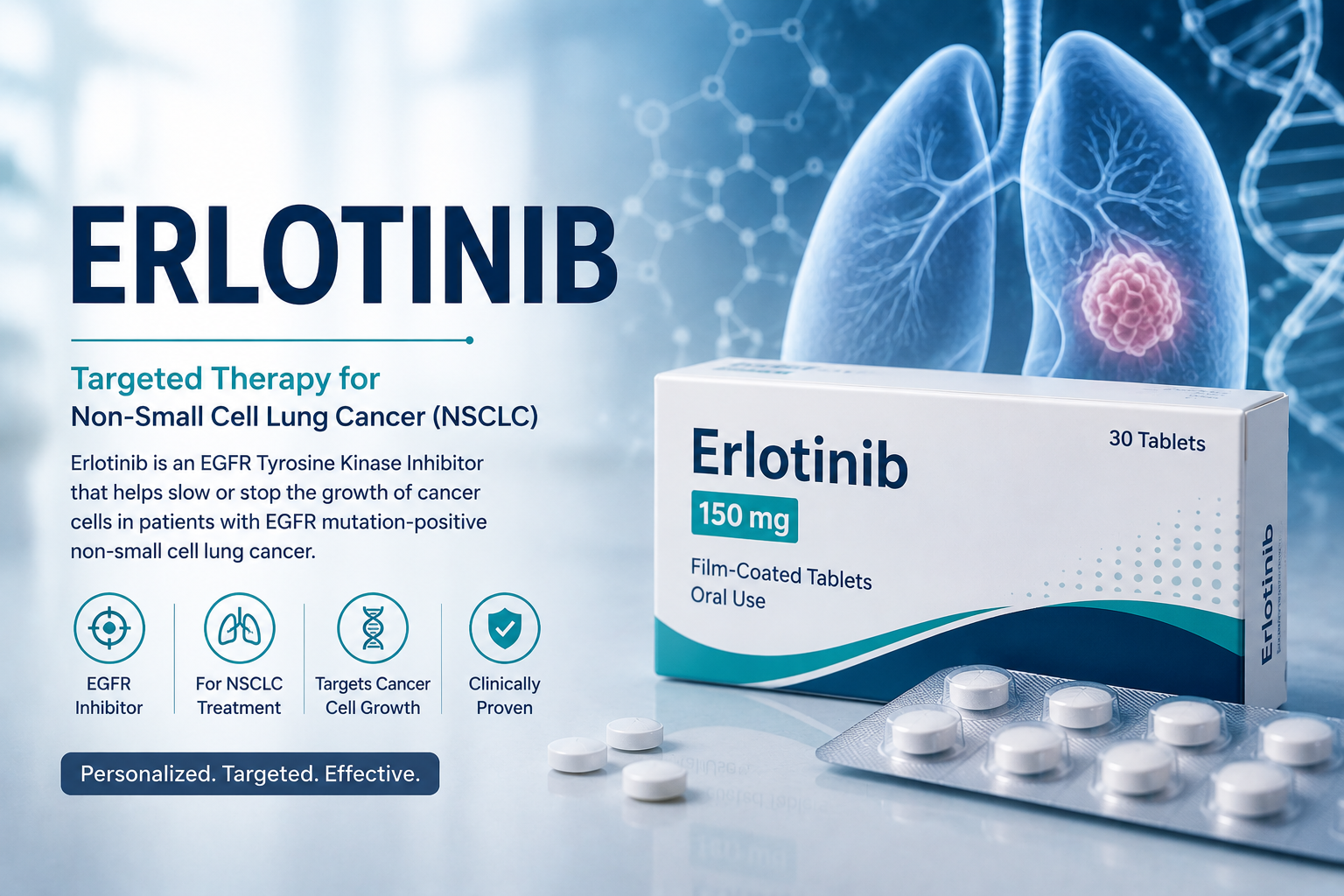


Erlotinib (sold under the brand name Tarceva) is a targeted antineoplastic medication categorized as a first-generation epidermal growth factor receptor (EGFR) tyrosine kinase inhibitor (TKI). It represents a major advancement in precision oncology, offering targeted therapy for specific solid tumors driven by EGFR signaling pathways.
By blocking intracellular signals that signal cancer cells to multiply, divide, and survive, Erlotinib slows tumor progression while sparing patients many of the systemic side effects associated with traditional cytotoxic chemotherapy.
What is Erlotinib Used For?
Erlotinib is indicated for adult patients for the treatment and management of specific advanced or metastatic cancers:
• Non-Small Cell Lung Cancer (NSCLC):
o First-Line Therapy: For patients with metastatic NSCLC whose tumors have specific EGFR exon 19 deletions or exon 21 (L858R) substitution mutations.
o Maintenance / Second-Line Therapy: For locally advanced or metastatic NSCLC that has not progressed after initial platinum-based chemotherapy.
• Advanced Pancreatic Cancer: Administered in combination with Gemcitabine for patients with locally advanced, unresectable, or metastatic pancreatic adenocarcinoma.
How Does Erlotinib Work?
The Epidermal Growth Factor Receptor (EGFR) is a protein located on the surface of normal cells and cancer cells that regulates cell growth, division, and survival. In certain cancers, EGFR pathways are overactive or mutated, fueling uncontrolled tumor growth.
Erlotinib operates through a focused molecular mechanism:
• Reversible Binding: Erlotinib reversibly competes with adenosine triphosphate (ATP) to bind to the intracellular tyrosine kinase domain of the EGFR protein.
• Phosphorylation Inhibition: By blocking ATP binding, it prevents receptor autophosphorylation and shuts down critical downstream signaling cascades (such as the MAPK and PI3K/Akt pathways).
• Apoptosis Induction: Blocking this signal halts cell proliferation, suppresses tumor angiogenesis (new blood vessel formation), and triggers programmed cell death (apoptosis) in EGFR-dependent cancer cells.
Benefits of Erlotinib
• Targeted Antitumor Action: Selectively inhibits signaling pathways in tumors expressing EGFR mutations, improving progression-free survival (PFS) in candidate patients.
• Oral Administration: Delivered as a convenient once-daily oral tablet, avoiding frequent intravenous infusions.
• Chemotherapy-Sparing Option: Serves as an effective non-chemotherapy baseline option for eligible first-line NSCLC patients with confirmed EGFR driver mutations.
Available Strengths
Erlotinib is formulated as single-agent, film-coated oral tablets:
• 25 mg film-coated tablets
• 100 mg film-coated tablets
• 150 mg film-coated tablets
Recommended Dosage & Administration
Erlotinib dosing depends on the specific cancer type being treated and patient-specific factors such as smoking status or drug interactions.
Standard Adult Dosage Guidelines
• Non-Small Cell Lung Cancer (NSCLC): 150 mg orally once daily.
• Pancreatic Cancer: 100 mg orally once daily in combination with Gemcitabine.
Crucial Administration Rules
• Strict Empty Stomach Requirement: Must be taken at least 1 hour before or 2 hours after eating food. Food significantly increases Erlotinib bioavailability (up to 100%), which can lead to unpredictable drug exposure and elevated toxicity.
• Swallow Whole: Swallow tablets whole with water. Do not crush or split.
• Smoking Impact: Cigarette smoking increases Erlotinib clearance via CYP1A2 induction, reducing drug concentrations in the body by up to 60–64%. Patients are strongly advised to stop smoking, or dosage adjustments may be necessary under medical supervision.
Missed Dose
• Take the missed dose as soon as remembered on the same day if possible. If it is close to the next scheduled dose, skip the missed dose and resume your standard daily schedule. Never take two doses at once.
Common & Serious Side Effects
Erlotinib exhibits a distinct side-effect profile linked to EGFR inhibition in healthy epithelial tissues (like skin and the gastrointestinal tract):
• Common Side Effects:
o Acneiform Skin Rash: Occurs in up to 50–85% of patients (often considered a marker of target drug activity).
o Gastrointestinal Symptoms: Diarrhea, nausea, loss of appetite (anorexia), vomiting, and stomatitis.
o General & Ocular: Fatigue, dry skin, brittle nails, paronychia, and dry or irritated eyes.
• Serious & Potentially Life-Threatening Warnings:
o Interstitial Lung Disease (ILD): Rare (1.1%) but severe lung inflammation (pneumonitis). Immediate reporting of new or worsening shortness of breath, cough, or fever is required.
o Gastrointestinal Perforation: Severe risk of perforation in the stomach or intestines, especially in patients taking concurrent NSAIDs, steroids, or anti-angiogenic agents.
o Hepatotoxicity & Renal Failure: Can cause liver failure, elevated bilirubin/transaminases, and renal impairment (often secondary to severe dehydration from diarrhea).
o Severe Dermatologic Reactions: Bullous, blistering, or exfoliative skin disorders (e.g., Stevens-Johnson syndrome).
o Ocular Disorders: Corneal ulceration, severe keratitis, or corneal perforation.
Drug Interactions & Gastric pH Impact
Erlotinib is extensively metabolized by liver enzymes CYP3A4 and CYP1A2:
• Gastric pH Altering Drugs: Erlotinib solubility depends on an acidic gastric pH. Proton Pump Inhibitors (PPIs like omeprazole) significantly decrease Erlotinib absorption and should be avoided. If H2-receptor antagonists or antacids are needed, dosing must be separated by several hours.
• CYP3A4 Inhibitors: Strong inhibitors (e.g., ketoconazole, clarithromycin) increase Erlotinib exposure and toxicity; dose reductions may be needed.
• CYP3A4 Inducers: Strong inducers (e.g., rifampin, phenytoin, carbamazepine, St. John's Wort) substantially reduce Erlotinib levels, risking treatment failure.
• Warfarin: Increases the risk of severe bleeding and elevated INR; frequent monitoring is required.
Pregnancy and Breastfeeding
• Pregnancy Warning: Erlotinib can cause fetal harm when administered to pregnant women due to its mechanism of action. Females of reproductive potential must use effective contraception during treatment and for at least 1 month after the final dose.
• Breastfeeding: It is unknown if Erlotinib passes into human milk. Breastfeeding should be avoided during treatment and for at least 2 weeks following the last dose.
Monitoring During Treatment
Therapy requires ongoing surveillance by an oncology specialist:
• EGFR Mutation Testing: Mandatory diagnostic confirmation of EGFR exon 19 deletion or L858R mutation prior to initiating first-line therapy for NSCLC.
• Liver & Kidney Function Monitoring: Baseline and periodic testing of serum transaminases (ALT, AST), total bilirubin, renal function, and electrolytes.
• Symptom Surveillance: Routine assessment for persistent diarrhea (to prevent severe dehydration), skin toxicity, and acute pulmonary symptoms.
Generic Erlotinib
Generic versions of Erlotinib hydrochloride are globally available following the expiration of original brand patents:
• Cost-Effectiveness: Significantly lowers treatment costs for patients and healthcare systems compared to brand-name Tarceva.
• Bioequivalence: Delivers equivalent active drug concentration, safety profiles, and therapeutic efficacy as certified by regulatory authorities (such as the US FDA and EMA).
Frequently Asked Questions (FAQs)
Why does Erlotinib cause a skin rash, and is it dangerous?
EGFR is normally expressed in skin cells to support tissue repair. Blocking EGFR causes a rash that resembles acne. While uncomfortable, the rash is a common drug reaction, and studies often correlate rash severity with better tumor response. Your oncologist can prescribe topical or oral treatments to manage it.
Can I take antacids or PPIs with Erlotinib?
Proton Pump Inhibitors (like omeprazole or esomeprazole) should generally be avoided because they raise stomach pH and decrease Erlotinib absorption. Ask your doctor for safe alternatives and proper dosing intervals.
What should I do if I develop severe diarrhea?
Diarrhea is a frequent side effect. Begin taking antidiarrheal medication (such as loperamide) at the first sign of loose stools, drink plenty of fluids to avoid dehydration, and inform your oncology team promptly if it persists.
Important Safety Information
This document is intended strictly for educational purposes and does not substitute for professional medical advice, diagnosis, or treatment. Always consult a qualified oncologist or healthcare provider regarding cancer treatment plans or drug modifications.
References
• U.S. Food and Drug Administration (FDA) Prescribing Information (Tarceva / Erlotinib)
• National Center for Biotechnology Information (NCBI) StatPearls: Erlotinib Pharmacology
• American Society of Clinical Oncology (ASCO) Clinical Practice Guidelines for NSCLC and Pancreatic Cancer
• European Society for Medical Oncology (ESMO) Targeted Therapy Guidelines
Contact Us
Are you looking for Generic Erlotinib Hydrochloride, wholesale distribution, global supply availability, or pharmaceutical regulatory documentation?
Our expert team can assist you with supplier verification, product documentation, international licensing, and export logistics. Contact us today for details.
What is Erlotinib?
Erlotinib (sold under the brand name Tarceva) is a targeted antineoplastic medication categorized as a first-generation epidermal growth factor receptor (EGFR) tyrosine k…